
Many years after my intermediate education days, I’m still struggling to describe how I felt about History. I was a self-declared ‘lost cause’ at Maths, so I tended to stare at the ceiling during Algebra, but would soon regain mild ‘interest’ during English, only because I was not flunking every other exam.
But History ! … People who looked like me were forever being outsmarted, outgunned, smashed in battle, brought to heel, or driven into the mountains, and therefore did not inspire much confidence in a young, impressionable pubescent boy.
If you took away Shaka (often referred to as ‘Shaka Zulu’) and his battle formations and military innovations, one could scarcely find any worthwhile heroes to write home about. Come to think of it, the entire framing revolved around the European: whom he’d met – or fought – during his trek away from his own disaffection with the Cape colony in pursuit of his own happiness in an interior no man who looked like him had ever trodden.
Everyone else was a footnote, if they were lucky. Factor into this the now derogatory pejoratives like Hottentot, and one can only imagine how the Coloured learners must’ve felt. This, of course, was by no means accidental. Rather, it was a meticulous inculcation designed to express the logic of colonialism and the various forms of repressions that derived from it. After all, what history could one impart to ‘hewers of wood’ other than to remind them of their primitive or uncivilised origins, and how their vassal station was simply how things had always been?
We might not have realised it as kids bent on making the next school grade, but the landmark episode, signified by the arrival of three ships – the Reijger, Drommedaris and Goede Hoop – at the Cape of Good Hope probably meant one thing to black learners and something else entirely to his or her white or brown counterparts sitting in the next desk.
Those names are burnt into our memories, because they were so continuously repeated. In that Eurocentric context, generations of kids then had to make do with a dwarfish history that barely and/or selectively mentioned their forebears, or grossly misrepresented the land they called home, as well as its neighbours.
All of this in the wake of the appointment by the Department of Basic Education (DBE) of a Ministerial Task Team back in 2019 to review the History curriculum, which presented its proposed draft to the minister in 2025. Amongst its terms of reference was the developing of a new history curriculum for Grades 4 to 12, carrying out provincial consultations, screening textbooks for alignment with the proposed new curriculum, and so on. With the deadline for public submissions having been reached and surpassed, this matter is now at an advanced stage, and both educational experts and pundits are either applauding or asking picky questions.
The proposed new Afrocentric posture, some academics write in a Daily Maverick piece, ‘will help learners understand that communities and kingdoms in Africa were sophisticated, innovative and had global connections long before the colonial era’. It will vehemently seek to refute British historian Hugh Trevor-Roper’s conclusion that ‘there is only the history of Europeans in Africa. The rest is darkness.’ At the heart of the draft is the paradigm shift towards what the Fallists would’ve called ‘decolonised education’ against all symbols of colonialism during their protest action circa 2015.
The proposed new curriculum is set to remove indigenous knowledge like iiziduko (clanial names) and oral traditions from being merely cultural accessories on Heritage Day and place them at the forefront of the classroom, amongst a host of other efforts. Where some would be at pains to admit that this curriculum is ideological, the DM contributors not only accept but double down to justify why this is so.
‘It is ideological in the same way that the previous history curriculum was ideological,’ they write, ‘and any curriculum document is an ideological document. Neutrality does not exist in history any more than it exists in history education. What is important in this curriculum is that the ideology is clear and does not pretend to be anything else: the curriculum is African-centred.’
Fair enough. However, one immediately foresees a monumental task. By its very nature, ideology usually borrows its cue from politics, so whose politics might have informed this curriculum? Is this an ideology crafted around the narrow politics of a majority ruling party or an all-encompassing Pan-Africanist and Freedom Charter-type of doctrine that recognises South Africa – and its schools – as a place for all who live in it, black and white? If it’s the former, it will likely wind up a dud – useless, exclusionary, and too sanitized by bias to ever be honestly accepted even by the other whom it seeks to favour – just like the one that came before it. If it’s more towards the latter, we’re getting somewhere. And getting somewhere means there’s a helluva long way to go.
For the most part, European history in South Africa revolved predominantly around the British and Afrikaner, and was therefore a more contained, compartmentable beast. The African perspective is a sprawling corpus of the San, Kho, Xhosa, Zulu, Pedi, the Cape Malay, indentured Indians, the interracial Coloured and many more. With each of these groups – marginalised for centuries – all seeking to be seen, do all the textbooks in the world have enough pages to ensure that all ultimately find equal representation?
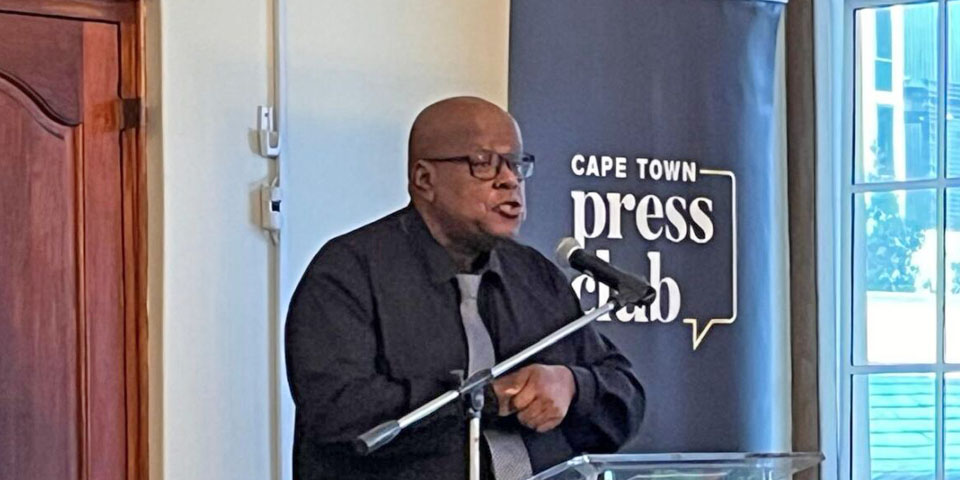
One of those who is not sold on the current effort is the Distinguished Professor of Education at Stellenbosch University, Jonathan Jansen. Spelled out in a talk to the Cape Town Press Club last month, Jansen’s misgivings are firstly based on the absence of an ‘organizing logic, upfront, that states explicitly why this change is necessary, why now, and what is the theory of change (that is, how the change will unfold under ideal conditions).
‘To understand what is in and what is out, you need a coherent, organising logic to guide teachers and persuade the public around those key questions. In its absence, every selection (or deselection) of content comes across as trivial (the French revolution is out, the Haitian Revolution is in; Jan van Riebeeck is out, P.W. Botha is in, big time.)’
Second, it’s a curriculum of the ruling party. ‘Its intellectual interests sound noble, but its ideological interests jump off the pages. How else does one explain that Biko and Sobukwe are reduced to three mentions each, but P.W. Botha is mentioned 18 times?’
Jansen also questions exactly which ‘African’ this supposedly African-centred curriculum speaks of; its ‘by-the-way’ references to non-black Africans; its omission of a more critical study of slavery in the Cape; and a focus on genocides committed by whites while ignoring those committed by Africans.
With his characteristic wit and pen dripping in both insight and sarcasm, Jansen basically draws a red line through the whole document. He sees it as a failure on many fronts — political, social and economic – marked by a blindness to the interrelatedness of history and events.
In conclusion he says the entire proposed curriculum should be scrapped and the work should start over, ‘or it will go the way of OBE’. But even he is well aware that politicians are generally not in the habit of considering constructive criticism, not even from the most esteemed academics.
Featured image: Prof Jonathan Jansen addresses the Cape Town Press Club.
This is an edited version of an article on Phakamisa Mayaba’s website, eParkeni. Used with permission.
Dear Phakamisa. A very apt piece at this juncture when the DBE are considering a rewrite of South African history. I cannot help but are required to agree with Prof Jonathan Jansen assertion/question ” whose history is it anyway: yours, mine, ours?
Having spend many years to uncover my genealogical history, a submicrohistory I must add – since it’s is genealogical, I discovered the interconnectedness of all South African history. The warts, the plastic surgery and broken bones connect us to so much of one another. Allow me to share that our fellow white Afrikaans South African easily will really celebrate or glowingly tell about the gallant war efforts of their ancestors, whilst excluding the black South Africans who similarly also perished in the war. Yet, there are no cenotaphs, memorial/commemoration stones erected to honour his sacrifices. Recognising the interconnectedness. Whilst I am not trying to apply reductionism in anyway whatsoever, if I stand on a podium to assert my history is more important than the next person’s, I am creating the same whirlpool we have been trapped in for the past 300 years. All I am pleading for an acknowledgement that the smelly karosses and poison arrows helped shaped our historiography.