
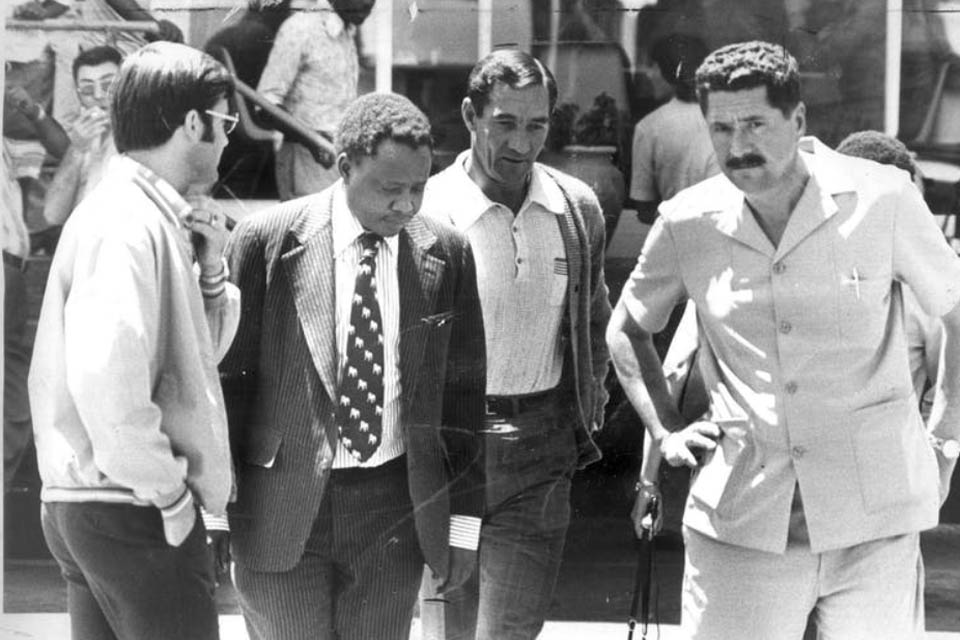
On 19 October, President Cyril Ramaphosa addressed journalists at a function in Johannesburg to commemorate ‘Black Wednesday’ – the day in October 1977 when the National Party government banned The World and Weekend World, as well as numerous Black Consciousness organisations. Some of his remarks appear below:
‘Across the world, the traditional business model of journalism is under severe pressure. Advertising revenue, which the media relies on to fund its operations, has increasingly shifted from newspapers, from broadcasters and other news organisations to large global digital platforms. Newsrooms have become smaller, experienced journalists have lost their jobs, and some of them have moved from pure journalism to setting up consultancies and have become analysts and what have you. Some community newspapers have had to close and many African language publications are struggling to survive.
‘These developments should concern all of us. When a newspaper closes, it is not simply a business that has failed. A community loses an important source of information.
‘Residents may no longer have a journalist who attends municipal council meetings, who investigates the failure of water services or reporting on the condition of local schools and clinics. And these are necessary information gathering and reporting avenues that suddenly close down. A community loses a voice when this happens, and when communities lose their voices, democracy itself is weakened.
‘This is particularly important in a number of areas in our country, in rural areas, in townships, where community newspapers and radio stations often provide information that is not adequately covered by the national media.
‘Community newspapers and community radio stations play a critical role in keeping our people informed. We must therefore recognise that the sustainability of journalism is a matter of public interest. The Competition Commission’s Media and Digital Platforms Market Enquiry has drawn attention to the profound changes taking place in the media industry.
‘The R688 million grant support package from Google for national, community and African language media is a welcome development, but it cannot on its own really resolve the challenges that are facing journalism in our country. We need an ongoing conversation among the media industry, also in government, in business and digital platforms, about how we sustain a diverse and independent media. Such support must be structured in a manner that protects editorial independence.’
For President Ramaphosa’s complete address, click here.
Featured image: Percy Qoboza, editor of The World, being arrested by security police on ‘Black Wednesday’, 19 October 1977. The World’s offices were closed, and the paper was banned. He and many others were then held for six months without trial. Source: The Media Online / Arena Holdings Archive.
//////////////////////////////////