

By David Willers
‘Cost cutting and short-termism, underinvestment, a lingering sense of disappointment. Perhaps in a way the Adelphi, like its sister hotels, is a perfect expression of contemporary Britain. Faded and forlorn, clinging to past glories, it might just be the most authentic place to stay in the country right now.’ That’s the way one reviewer described a former top hotel in Liverpool a week or so ago.
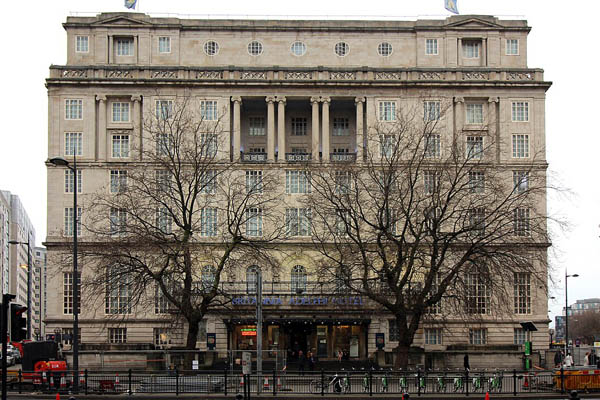
The Britannia Adelphi Hotel in Merseyside, Liverpool, in 2018. (Wikipedia)
Look out of the window, and what do we see? Big flag-carrying protests in blatant law-breaking support of a designated terrorist group; dozens of arrests; counter demos by crowds of nationalist Britons; police ‘cautions’ and arrests for online hate speech; a tanking economy; murders with a religious motive; seemingly uncontrolled illegal migration. One might be forgiven for thinking Britain is going downhill.
Take into account lengthening NHS waiting lists, high taxes, rampant inner-city knife crime, joblessness, vituperative heated exchanges on radio and television, the collapse of public support for the two main political parties, and the emergence of a Trump-like figure in Nigel Farage who looks like a solid shoe-in for the job of next prime minister, and you can understand commentators who talk about a blame culture, and a general feeling that everything is someone else’s fault.
To make things even worse in this oldest of democracies, you also now have the Americans lecturing the UK on threats to free speech, because British folk have been locked up for expressing an opinion.
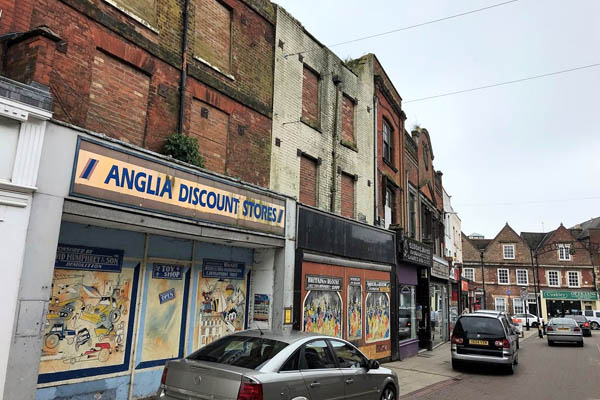
Derelict shops in Wisbech High Street, Cambridgeshire. Richard Humphrey on Geograph.org.uk. (Creative Commons)
Living in Britain, as I do, I am sometimes asked whether the UK is going to the dogs by South African friends, who are bewildered by what seems at times to be a convulsing political landscape, as reflected in the SA media.
I don’t blame the papers; if it bleeds it leads, as they say. But my answer is no, it’s not going down the Swanee. The old charm is still there — the pubs are full, with roaring fires as the nights draw in, and the theatres, exhibitions, opera, classical and popular music venues have never been better attended. The landscapes, parks, beaches, football, rugby, walking clubs, reading clubs, debating societies, tolerance, liberal disposition, and all the things that make this a great country and the reason it is still the number one magnet for would-be migrants from around the world have not disappeared. What’s more, due to global warming, even the weather is improving.
But it’s also not an easy question to answer, because it is set against two thousand years or so of well-recorded social, historical and political change, always for the worse, for the better, and so on. We are somewhere on that spectrum, a continuum of swings and roundabouts; but also a very subjective continuum, bearing in mind Gore Vidal’s famous aphorism that history is just a kind of gossip. Comparisons that make any sort of sense in the relative context of today’s heated events are difficult to find. But the historian Paul Johnson’s description of the ‘birth of the modern’ -from 1815 to 1830 – may provide some frame of reference.
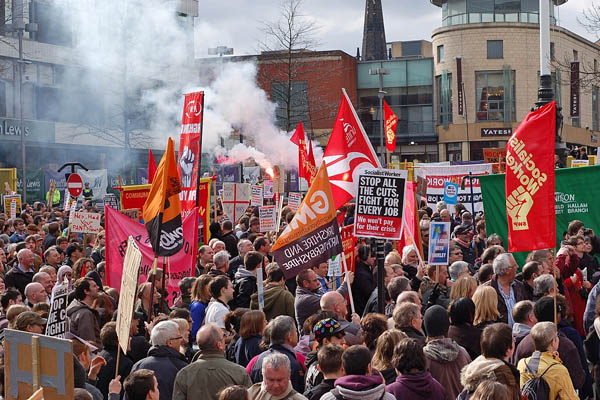
A labour demonstration in Sheffield. (Wikimedia Commons)
This was a period in British history following the French revolution when the war against Napoleon produced a severe recession, and even starvation. Riots ensued by what was called ‘the Mob’. ‘Can the Centre Hold’ was the cry of the day, reprising much the same preoccupations with which the Labour government is confronted today. Lord Liverpool, a young tourist observer of the storming of the Bastille and the massacre of its garrison, was left with a lifelong impression, especially during his tenure as prime minister (1812 to 1827) of the fragility of lawful authority which hesitates in the face of violence, and of the barbarism which can seize an aroused populace once it realises the powers that be have lost the will to govern. Lord Liverpool took very severe measures to keep the peace, calling in troops where necessary, to control the ‘Mob’.
As the years passed, moreover, parliament showed it could pass repressive legislation quickly when required, rather — and this is the important point — than allowing the military and/or police to seize power. This triumph of democracy contrasted vividly with events in continental Europe where military coups commonly occurred right up to the middle of the last century, when civilian authority quailed. With France, Spain, Italy and Germany being prime examples.
Right through the Victorian era, into the 20th century, the rule of law was applied ruthlessly when required to keep the peace. The police might have wielded truncheons, but it was always the civilian authority that called the shots.
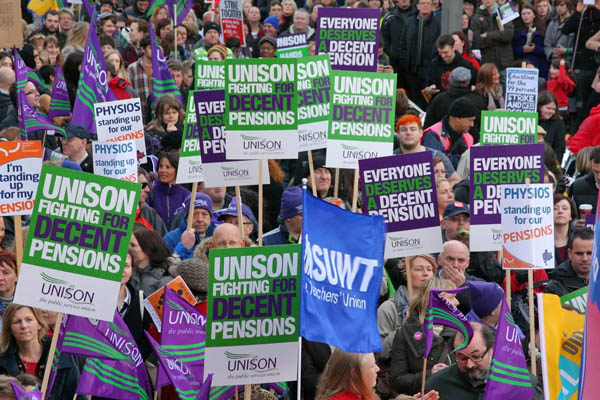
Public sector workers in Leeds, West Yorkshire, striking over government pension changes. (Wikimedia Commons)
My point is that it is instructive to compare this traditional pragmatic response by successive British governments to what seems to many today to be over-reaching repressive action by the current British prime minister, Keir Starmer, who deployed the full force of the law to nip violent hotel burning protests against illegal migrants in the bud. Like it or not, his response was a founded British tradition.
But all this raises a much more interesting question: parliamentary authority in the United Kingdom, the only country in Europe without a written constitution, is derived from the people, through a so-called social contract. The question is whether the social contract in Britain is today becoming too fragile to be relied upon to sustain a liberal democracy.
It does seem increasingly strained, as citizens’ expectations of the state and society no longer align with their lived realities. Traditionally, the British social contract implied a balance: citizens would contribute through work and taxes, and receive security, opportunity, and support from the state in return. Today, that balance is faltering.
The reason is self-evident. Like Germany and France in particular, Britain can no longer afford to spend crippling amounts on social welfare. Dramatic cuts are needed. But as France is finding, the need to reduce social expenditure is leading to another revolution, with dramatic upheavals as people object to pension reform, for example. The Germans are quieter about it all, but the road ahead is also going to be rocky, especially as in all three cases, building up the armed forces is now the top priority in the face of Russian aggression.
In the British experience, one of the most visible signs of the crisis is in public services. The National Health Service (NHS) is under severe pressure, with long waiting times, staff shortages, and declining satisfaction. Meanwhile, access to affordable housing, social care, and education has diminished, particularly for younger and working-class citizens. Many feel they are paying more through taxes and living costs but receiving less in return — eroding trust in the government’s ability to uphold its side of the social contract.
Economic insecurity also plays a major role. The cost-of-living crisis has hit millions, with wages stagnating and inflation driving up everyday costs. For younger people, home ownership and stable employment seem increasingly out of reach. Insecure work, student debt, and rising rents have left many feeling excluded from the promises of post-war Britain. This growing sense of generational unfairness — where younger people feel they are being asked to support a system that gives little back — adds further strain.
Social cohesion has weakened, too. Cultural and political polarisation, especially over issues like Brexit, immigration, and identity, has seemingly undermined a shared sense of national purpose. In short, the British social contract is fraying — not broken, but under real pressure. Whether it can be renewed depends on the willingness of political leaders to confront inequality, deliver on public expectations, and forge a vision of shared responsibility for the future.
The challenges that lie ahead of these political leaders are formidable. The long-standing north-south divide remains a persistent issue, despite government efforts like ‘levelling up’. Cities like London and parts of the south east continue to prosper, while the north of England, Wales, and parts of Scotland and Northern Ireland face economic stagnation.
Brexit, almost a decade ago, also reignited debates over national identity and the integrity of the UK. Scotland’s push for independence remains strong, and in Northern Ireland, Brexit disrupted delicate balances enshrined in the Good Friday Agreement. These pressures challenge the unity of the UK and raise fundamental questions about sovereignty and governance.
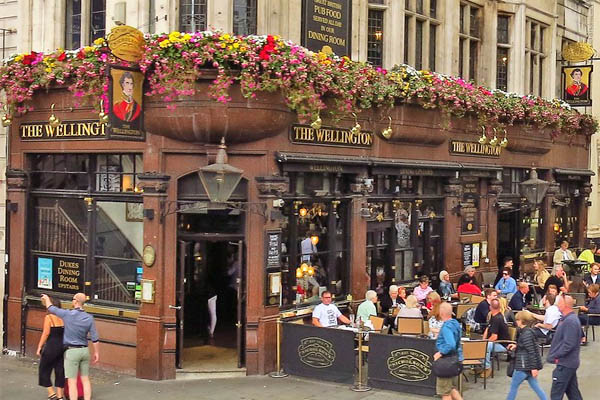
People enjoying lunch at The Wellington, a historic London pub. (Wikimedia Commons)
In many ways, the tensions in the UK are not unlike those in South Africa, albeit of a different order. The gender debate is a biggie of course, but even bigger than that are the assumptions that underlie much discussion, including that identity is more important than merit and that Britain’s past is somehow shameful. You see this in the debates on reparations. Never mind that Britain was the first country to abolish slavery and devoted much energy in trying to stamp it out, including eventually the Arab slave markets on the East coast of Africa and elsewhere, but she is now being asked to make huge payments in recompense to the West Indies. The same reparations are not been asked of the Arabs involved originally in the trade.
I predict a turn of the tide myself, especially following an important win this week on appeal by a fellow who was arrested and charged for burning a copy of the Koran and allegedly inciting violence through this provocation.
Free speech includes the right to offend, the British appeal judge said this week, after clearing the man, who burnt the Koran outside the Turkish consulate in London. ‘There is no offence of blasphemy in our law,’ Mr Justice Bennathan said. ‘The right to freedom of expression, if it is a right worth having, must include the right to express views that offend, shock or disturb.’
So, is Britain going to the dogs? Nope, I don’t think so. The social contract is certainly under pressure, but as long as proper free speech, the rule of law and parliament are around, Britain should be able to weather the storm, and reduce the national debt. The cuts in social benefits will happen regardless of the demonstrations, as markets dictate that simple economic reality determines electoral choices. But it could be a bumpy ride.
Featured image: Westminster Palace, London, seat of British parliamentary democracy. (Wikimedia Commons)
David Willers is a former South African diplomat and journalist, among others as editor of the Natal Witness. He also spent years working for the South Africa Foundation, notably as its London representative. He and his wife, Joy, now live in Wales, where his mother was born, and their two children and grandchildren live elsewhere in Britain.