
Bluenose readers might well regard feeding off social media as lazy journalism. So I hope they will forgive my eavesdropping this past Sunday on Songezi Zibi’s ‘public outreach’ of another kind.
The Rise Mzansi leader and chairperson of the Standing Committee on Public Accounts (SCOPA) used TikTok Live for a candid public ‘feedback session’ on the committee’s work, particularly around the serious problems experienced by the OR Tambo District Municipality (ORTDM), encompassing much of the Wild Coast, and the Buffalo City Metropolitan Municipality (BCMM).
Sitting comfortably in his study, Zibi opened the stream to some of his 36 600 followers on the platform, even fielding questions from them about the municipalities’ appearance before SCOPA earlier this month.

A screen grab of Songezo Zibi’s public feedback session on TikTok Live.
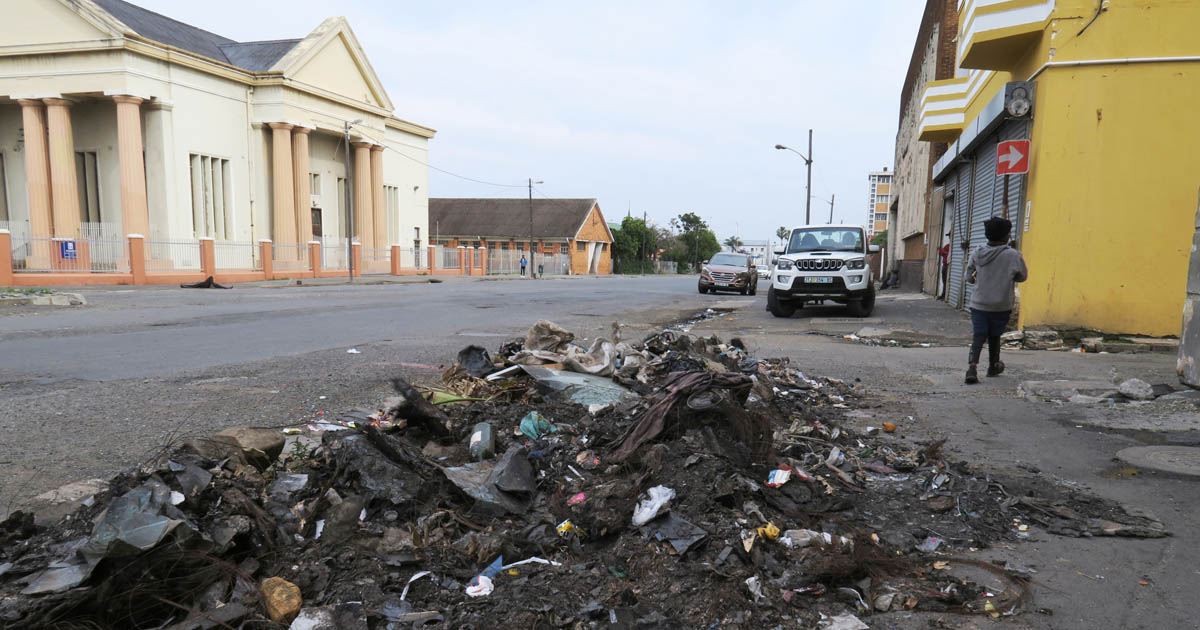
The burning issues: poor service delivery, including poor municipal billing; tender mismanagement; uncompleted multi-million rand projects; decaying infrastructure which local governments in the Eastern Cape (EC) in particular seem unable to reverse; and the impacts of all of these on rural communities.
At issue was last year’s finding by the Bisho High Court that the BCMM had not allowed for meaningful public participation in determining its electricity tariffs for the 2026/7 financial year. Various ratepayers’ associations and non-profit organisations hauled the municipality to court in August, and the new charges were set aside in November.
However, according to the DA in the Eastern Cape, the BCMM then tried to push the new tariffs through ‘another compressed public input window’ in the hope of submitting them to the national energy regulator by 12 December 2025, thus offering residents less than a month to examine the new tariff models. This timetable left little room for thorough scrutiny or meaningful amendment.
It added: ‘At a time when electricity costs are rising sharply, and when households and employers are already bearing the financial burden of past decisions made without proper consultation, we cannot allow the municipality to steamroll further punitive increases on already overburdened consumers.’ Past exorbitant rate increases have adversely impacted on the poor, leaving them, as Zibi put it, ‘squeezed.’
For Zibi, this situation has raised important issue especially ‘we don’t know the accuracy of the billing.’ For instance, how do meters actually work, how do water leaks (which are common in these areas as a result of a deteriorating infrastructure) ultimately affect billing, and what is reasonable for municipalities to charge?
Moreover, he noted that the lack of effective communication with communities was not limited to tariff increases. Some 60% of people who qualified for free basic services on the grounds of ‘indigence’ have not applied for it.
Also, he remarked, ratepayers in the BCMM were decreasing, and if these excessive rates were meant to absorb this shortfall, how come residents seemed to be paying so much and getting so little in return?
The municipality, he said, was spending only 1% of its budget on infrastructure maintenance, instead of the national benchmark of around 8%. As a result, it was descending down a ‘death spiral’ with deteriorating infrastructure resulting in water leaks, illegal electricity connections, and other malfunctions that have cost the municipality north of half a billion rand in the past financial year.
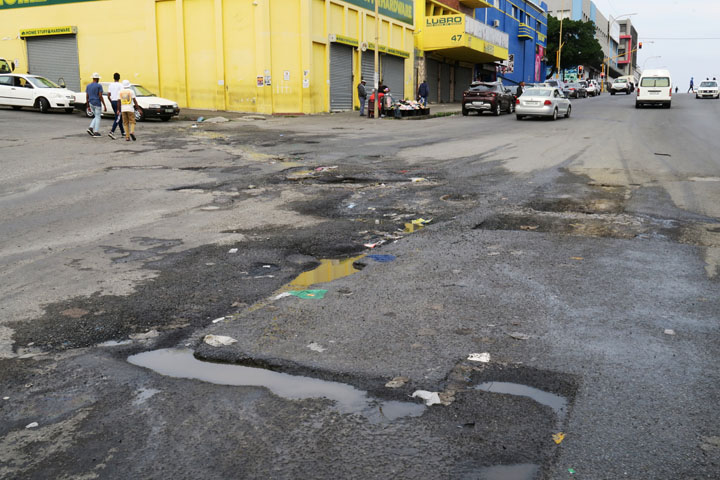
A long-standing water leak has resulted in deep potholes forming on Buffalo Street in the East London city centre. The municipality loses almost 40% of the water it buys from Amatola Water. (GroundUp / Steve Kretzmann)
The situation was worse in the surrounding rural areas where vital public projects were often not completed, leaving him wondering how people there were managing to survive.
He did disclose that ‘something was cooking’ between SCOPA, the Special Investigative Unit (SIU) and the Auditor General in respect of municipalities beset with tender irregularities and financial mismanagement.
Because the members of Municipal Public Accounts Committees (MPAC), which were tasked with monitoring and exercising oversight over municipal expenditure, were often drawn from the dominant party in a specific municipality, Zibi said, they were often ineffectual. In his view, only powerful institutions such as the SIU could deal effectively with wrongdoing. That, of course, along with elections.
With the next local government elections (LGEs) looming, Zibi appeared to be riding on his party’s 2024 election ticket of ‘bringing government to the people’, as a few TikTokers were quick and grateful to point out. More importantly, the unusual presser also seemed like a way of calling on activists to come forward, as he clearly feels that not enough political and voter education is being undertaken on the streets.
While he seemed reluctant to discuss Rise Mzansi’s election strategy in any depth, he did touch on the topical matter of foreign nationals. ‘Any country,’ he said, ‘that doesn’t know who’s here, what their name is, what their address is, that is a security risk’ – but rapidly added that although he was ‘not a shut-the-door-on-everyone person, I’m also not one for open borders.’ And, although he believes that the transfer of scarce skills is central and necessary to South Africa’s development, ‘you can’t tell me you can’t find South African waiters and clerks.’
Most of his time was devoted to issues affecting everyday people, such as the R1.25 billion disaster relief grant allocated last year. Despite having the Auditor General’s report in hand — and no doubt other resources as well – he wanted to hear from ordinary people what they thought the real problems were.
So he allowed all those who wanted to ask questions to do so. And what he got were raw, heart-of-the-matter ones which displayed a new sense of hope that – at last – someone would listen and take their concerns to parliament.
His accessibility was a breath of fresh air, especially for young people who have grown apathetic about political issues as well as the democratic process.
The only pity was that he would not go into detail about his party’s election strategy, leaving the BarefootLionHunter (this writer’s TikTok pseudonym) unable to provide his readers with a possible ‘scoop’.
FEATURED IMAGE: A pile of refuse on the corner of East London’s Oxford Street and Park Avenue. Illegal dumping and poor refuse removal is evident throughout the city. (GroundUp / Steve Kretzmann)