
By Destine Nde
The impending FIFA World Cup 2026 is a historic event for Africa as well as South Africa. For the first time, Africa will be represented by ten teams – five more than in 2018 and 2022. In order of their latest FIFA rankings, they are Morocco (8), Senegal (14), Algeria (28), Egypt (29), Cote d’Ivoire (34), Tunisia (44), the Democratic Republic of Congo (46), South Africa (60), Cape Verde (69), and Ghana (74).
At 8 pm on Thursday 11 June – in two day’s time — the eyes of millions of Africans will be glued to their television screens when Bafana Bafana clashes with the host, Mexico’s El Trio, in the opening match at the Estadio Azteca in Mexico City. This will be South Africa’s first appearance after a 16-year hiatus.
Bafana Bafana’s head coach, Hugo Broos, is determined to make amends for their early exit from the last African Cup of Nations. Some South Africans are not too satisfied with his final 23-man squad of 11 defenders and only four strikers. Supporters say he has made it clear that they will not play attacking, entertaining football, but will rather play defensively, aimed at fighting to survive.
The excitement is already palpable and is gaining momentum with every minute. Besides World Cup regulars like Morocco, Egypt, Algeria and Tunisia, and rising stars like Senegal, Cote d’Ivoire, South Africa and Ghana, there are also the newcomers, the DRC and Cape Verde.
The DRC, for instance, has been in the wilderness for 52 long years. The last time they qualified for a FIFA World Cup tournament was in 1974 when the country was still called Zaire. What is more, they managed to grab a spot only at the last minute, in a hard-fought battle in the intercontinental playoffs. It was a high-stakes encounter at the Estadio Akron in Zapopan, Mexico, where they ended their 52-year drought by beating Jamaica’s Reggae Boyz 1-0.
It was not only a thrilling encounter, but a match of double coincidences. The match was played on two different days in two different months, 31 March and 1 April. It also had two different central referees. Two goals scored by the Leopards of DRC were disallowed. The winning goal came in the 100th minute, and was only validated after a lengthy Video Assistant Referee (VAR) check.
It will also be the first tournament for Cape Verde, with a population of only 550 000. In fact, it has set a new record as the smallest country by land mass to qualify.
The tournament will be unique, for a range of reasons. First, the participating countries have been expanded from 32 to 48 (allowing, among others, for five more African countries). It is also the first time that the tournament will be hosted by three countries: Canada, the US and Mexico. There will be more matches (104) and more cameras than ever. At every game there will be 45 to 50 cameras focusing on the action. Cameras mounted on the referee – the ‘referee view’ — will show viewers what the referee can and cannot see.
FIFA boss Gianni Infantino has told fans to expect the equivalent of ‘104 Super Bowls’. It is predicted that up to 5 million tickets will be sold, and up to 6 billion people will engage with the competition around the world, via television and the internet.
There will also be AI-enabled 3D avatars of every player. This will assist VAR decisions by enhancing precision. Some commentators have called it ‘The AI World Cup’. FIFA has hooked up with TikTok and YouTube in a landmark partnership. They will become FIFA’s first ever ‘preferred platforms’, a go-to place for fans and creators. Even the statistics will be given a glow-up by AI. Specialist say we should ‘Get ready for something called ‘data-tainment’’, as fans will be provided with ‘unparalleled insight and enjoyment’.
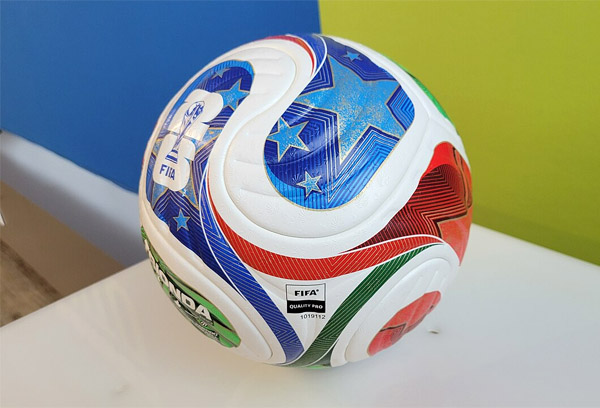
The Adidas Trionda football for 2026 FIFA World Cup. It contains a chip that will communicate with the VAR system. (Wikimedia Commons)
This year’s ball, too, is especially interesting. It is called the Trionda. Its colour and panelling are its most distinctive features. It has red, blue and green graphics, with maple leaf, star and eagle motifs, corresponding to the three host countries. The Trionda has an erodynamic surface. It has only four panels (the fewest ever), thermally bonded with heat and adhesives, not stitched like its predecessors.
It is a great improvement from, for example, the Jabulani used in South Africa in 2010. It has a very low drag coefficient — the air resistance it experiences as it moves. Even more interestingly, the Trionda has ‘connected-ball technology’ that lets computers know when the ball is kicked, that will help in offside decisions. This comprises a chip inside the ball that sends data to VAR and the tournament’s semi-automated offside system. It has to be charged.
But teams and supporters will also face some unique challenges. Indeed, teams may be shocked to discover that their toughest opponent will be the extreme heat. It is summer in the northern hemisphere, and very hot temperatures are expected across many North American states, with risks of wildfire highlighted. That is why matches in the hottest cities and non-air-conditioned stadiums have been shifted away from the most dangerous hours of the day. Current FIFA heat policy is that all matches will have three-minute hydration breaks midway through each half.
The tournament is also held at a time when immigrants in the US feel less and less welcome. Qatar attracted some 1.4 million visitors in the 2022 tournament. This number is expected to drop to 1.2 million due in part to the activities of the US Immigration and Customs Enforcement (ICE) agency. Human Rights Watch has urged FIFA to pressure the US government into establishing an ‘ICE truce’ during the tournament. Reports say hotel bookings are far below expectations in 11 US host cities.
Another challenge is the high cost of tickets and transportation. Gianni Infantino has defended the prices by claiming that they reflectg the ‘cost of doing business in the US’. An advert on FIFA’s marketplace, for instance, reads: ‘Four tickets to the final at a cost of $2.3 million each’ — nearly five times higher than those of the last World Cup in Qatar.
The New Jersey transport system initially set the price of train round-trip transport at US$150. After a public outcry, they reduced it to US$105, a fare that normally costs only US$18. High costs and hyper-immigration control are greatly responsible for the predicted drop in visitors. And broadcast rights are extremely expensive.
Lastly, this World Cup not only spans four different time zones with very different climates, but tremendously vast distances separate host cities.
Despite all of this, nothing draws people together like soccer, and its magnetic power is strongest at the international level, specifically the FIFA World Cup. The excitement building up before each game, together with other patriotic impulses, often helps to pause internal conflicts. And when national anthems are sung, with the players standing there on the pitch, wearing their national colours, it is no longer just a game but a sacred moment—a moment when the patriotic feeling in the hearts of citizens break their bounds and overflow into tears, cheers, and innumerable voices singing as one, with flags raised high and hands on the chest.
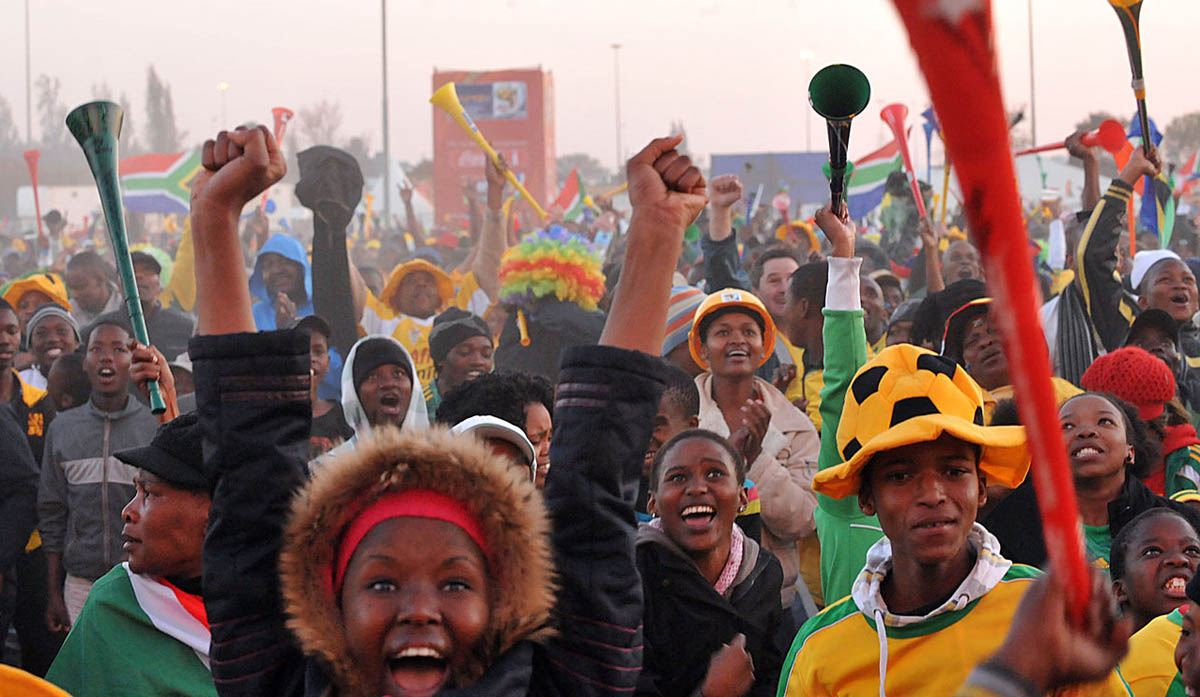
Added to this, the World Cup is a platform like no other for universal exposure and cultural exchange. This year’s edition is a wonderful opportunity for up to 10 African countries to promote their cultures and sell their national brands to the world, just as the Brand South Africa was sold during the 2010 FIFA World Cup, to the effect that something as ordinary as a vuvuzela became a worldwide phenomenon.
The World Cup serves as a large avenue for cultural meetings and exchanges. It is also a good platform for activists to raise awareness about contemporary social crisis, like the ‘One Love’ or ‘No Racism’ armbands worn by players and supporters with regards to LGBTQ+ and human rights.
After being stunned by the tremendous talent in Africa, The late Brazilian superstar, Pele, predicted that an African nation would win the World Cup before the year 2000. He later adjusted his timeline to 2010. Now it is 2026, and the possibility is concrete. Morocco, for instance, has graduated from ‘participant’ to ‘contender’.
The ‘home-grown’ model, too, has become popular in Africa: eight of the ten African teams have local coaches. Moreover, North America is home to massive African immigrant communities that can provide the much-needed ‘home’ support, seeing that visa barriers and travelling expenses are an insurmountable barrier for most fans in the Motherland.
The coaches have been appointed. The players have been selected. And the teams have travelled to North America. All that remains is for the action to begin.
FEATURED IMAGE: Bafana Bafana fans watching the opening game of the FIFA World Cup 2010 on a big screen in Soweto. Image: Wikimedia Commons.
Perhaps Bafana should have lenghtened their 16 year hiatus judging by their game last night. Remembering our Fifa World Cup opening Game.