
SA Celebrates Heritage Day
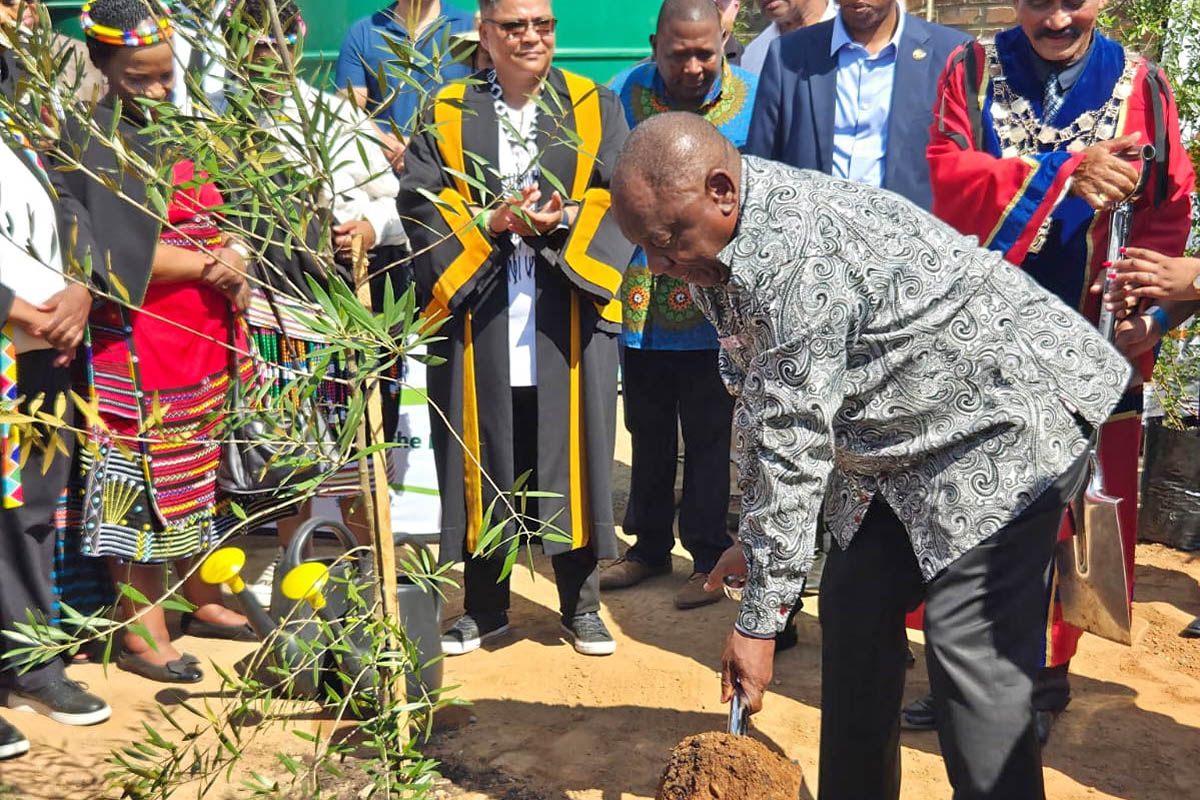
On Thursday last week, President Cyril Ramaphosa delivered his Heritage Day address in the Bongolethu Sports Stadium in nearby Outshoorn. Among others, he said:
‘Today, across our country, as South Africans we are celebrating who we are. We are celebrating the languages we speak, the songs we sing, the food we prepare, the clothes we wear, the stories we tell, and the customs we observe. We are celebrating the traditions handed down to us by our parents and grandparents’.
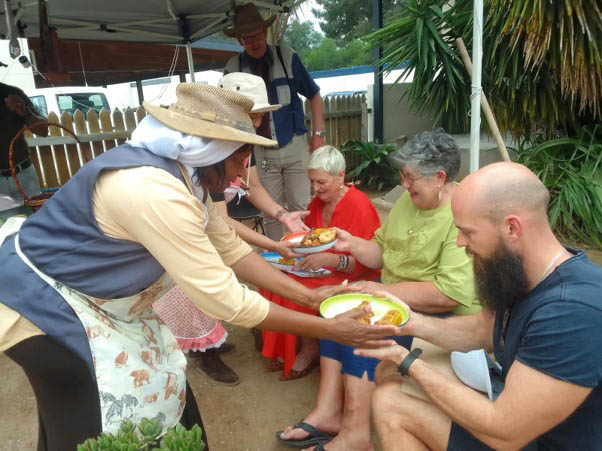
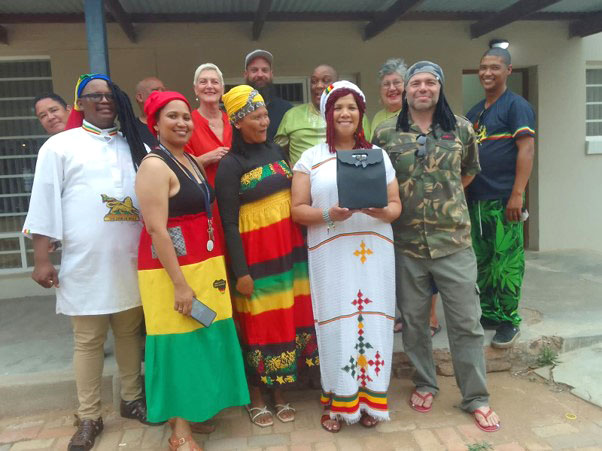
The next day, Willowmore certainly did its best to live out this injunction, in the form of a remarkable celebration at the Willowmore Police Station. It was actually a cultural exhibition competition, with competent judges. There was a Khoi-San stall, a Boere stall, a Rastafarian stall, and a Diversity stall. Representatives of each culture wore their traditional attires, danced to the tunes of their native songs, and prepared and served their most characteristic dishes to the judges.
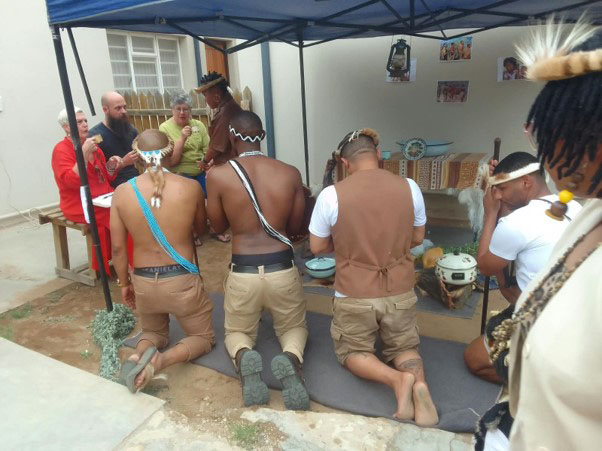
The participants also recounted short versions of their histories and heritage. The Khoi-San spoke about their origins and lifestyle, presenting and explaining the uses of various medicinal herbs. The Rastafarians spoke about Jah, and their love for peace and all the living, including animals, which is why they are vegetarians: ‘One Love!’. Their ‘dagga’ was, expectedly, proudly and abundantly displayed. The Boere spoke about their resilience, and their enduring ability to overcome vairous challenges: ‘n Boer maak ‘n plan !
At the Diversity stand, Detective Felix – who is of Portuguese/’Coloured’ descent — expressed his the pride and glory of South Africa’s diverse cultures by saying: ‘Diversity is richness because of its various contributions — a bit of everythin!’
She also recounted some amazing facts, including that Afrikaans is the world’s youngest language … that ‘Coloured’ people are the most genetically diverse group in the world … That South Africa has the largest Indian population in the world outside India itself, and that the potjie, metal cups and plates originated in Portugal.
Prizes were received and celebrated. Then all the food was taken by a long convoy of police and traffic vehicles to the Morningside location and distributed to hungry children, which were so many that the food was insufficient. Afterwards the convoy drove around town, with passengers singing songs of ‘Ubuntu’.
It was indeed a historic Heritage Day, all thanks to Station Commander Lieutenant-Colonel Winnaar and her colleagues. Indeed in her keynote address, she said: ‘Today we are celebrating Ubuntu, the spirit of caring, sharing, and standing together as a community. Umuntu ngamuntu ngabantu reminds us that a person is a person through other people. When one person in our community is struggling, it’s our responsibility to extend a helping hand.’
At Morningside. she said feeding hungry children was not only about food but also about compassion and assistance. ‘Some in our community go to bed without knowing were the next meal will come from; many carry burdens that are not visible to us. Today we’re saying, you’re not alone. You’re part of our community and you matter. …
‘Heritage Day is a time to reflect on the kind of community we want to build: a community where people look after one another, where we respect our differences while celebrating what unites us, no one should feel invisible because of their circumstances.’
She ended by thanking everyone who helped or participated, stressing that ‘our greatest heritage is not just what previous generations left for us, but what we choose to leave behind for future generations … let us leave behind a legacy of kindness, Ubuntu, service, communities that care for the most vulnerable.
‘One meal can make a huge difference. May we celebrate our heritage, embrace our diversity, practice Ubuntu, and continue to build a community where no one is left behind’.
This year, the government chose to celebrate Heritage Day by initiating a nation-wide campaign to plant ten million trees. This forms part of Ramaphosa’s One Billion Trees Programme, which aims at mobilising South Africans to help mitigate the effects of climate change — to leave behind a greener environment for posterity to inherit. The official events took place in At the Freedom Park Heritage Site in Pretoria, presided over by the Deputy Minister of Forestry, Fisheries & the Environment, Bernice Swartz, and by Ramaphosa in Oudtshoorn.
Also present in Willowmore was the executive mayor of the Sarah Baartman District Municipality, Councillor Deon De Vos. He told me that he had attended many high-level meetings where the matter was discussed, and that the main plan was to decentralise the initiative: ‘All departments, private sectors and communities must be included.’
The citrus industry, for example, is the biggest in the district. He has partnered with farmers to plant many more citrus plants: ‘it’s a win/win for everybody. Farmers will benefit from the trees, and we will reach our target, because every tree counts. Greening doesn’t require specific trees.’
He also plans to start school tree-planting campaigns, turning dump sites into planting sites, and encourage the cultivation of gardens. ‘Planting trees is not a problem. Our main challenge is keeping the records, so that we can know when our target is reached,’ he explained.