
By Maeder Osler
Proudly energised by the Greatest Rivalry rugby series extended from South Africa to Baltimore in the United States, followed by the Mandela Challenge Plate match in Perth in Australia, it surely is mind-boggling that once upon a time a small minority of white South African folk arrogantly declared that Maori Kiwi rugby players were not welcome in this land of green and gold.
In fact, one wonders whether those self-appointed, sanctimonious folk were fed more green than gold. One can only say, thank goodness that all of that is behind us, though not forgotten.
Sunday afternoon note from AI to Maeder Osler : ‘The Wallabies held off a historic late surge from the Springboks to secure a wild 42-38 victory in Perth. … In one of the most chaotic finishes in modern test rugby history, Australia managed to secure the win and reclaim the Mandela Challenge Plate despite playing the final minutes with just 11 men on the field …
Maeder’s late note: Did Rugby and Capitalism triumph in Perth on a cosmopolitan AI stage, anticipating next year’s rugby World Cup in AU? If so, how might that help, hinder or alter the seeming strangulation of the Fourth Estate?
All sorts of dimensions, threads and linkages present themselves. Quite a bit of early Springbok–Kiwi memorabilia happens to be stored in the Waenhuis. It’s also close to the Anglo Boer War battle sites and memorials in the Colesberg district involving Kiwi and Aussie soldiers, notably New Zealand Hill and Australian Hill, providing another layer to this long tale of friendly and not so friendly rivalries.
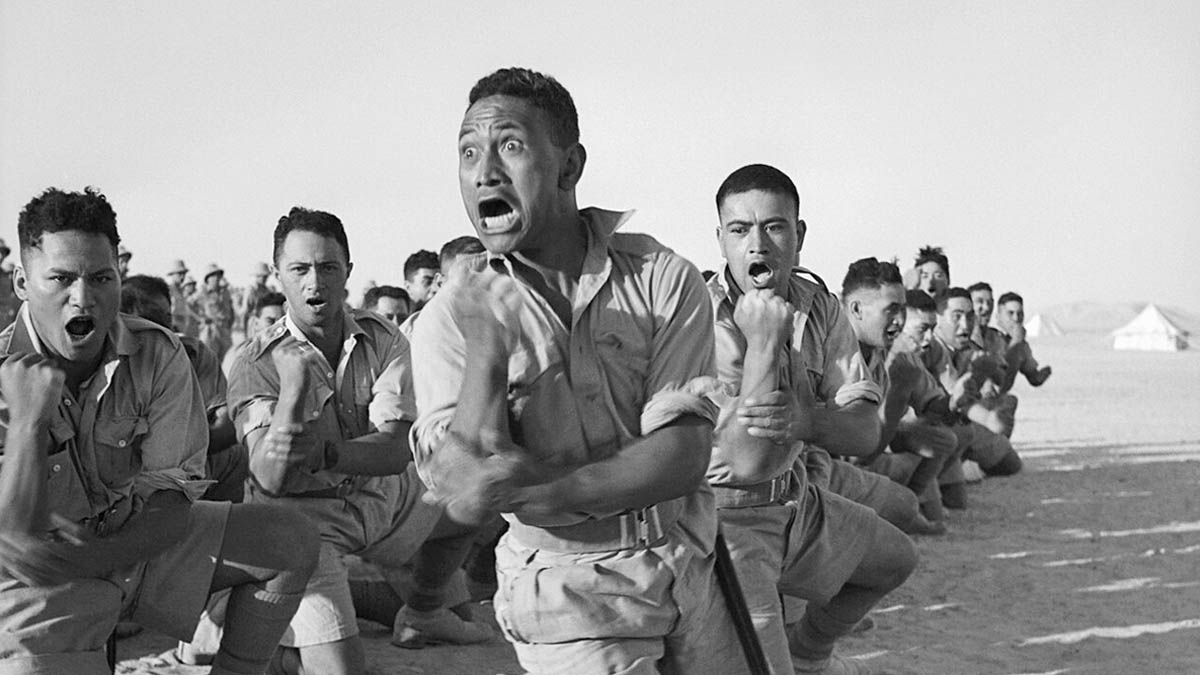
Indeed, the New Zealand historian Mike Dwight has speculated that New Zealand troops might well have chanted the Haka in these nearby hills, after doing so upon their arrival in the Cape Town docks, to the bemusement of onlookers.
At the same time, I’m wondering whether there are any linkages between these sorts of beeg events, beeg travels and beeg publicity and the parlous struggles for attention and survival of the media worldwide.
We at Toverview are also right up there, if on a very small scale, at the butt end of budgeted survival in November or December 2026 — unless we can somehow transition away from that as well. In brief, like many other digital community and public interest media, we’re between a rock and a hard place.
Herewith, by way of context, a link to a riveting analysis of the formidable challenges facing public interest media in South Africa and elsewhere by Styli Charalambous, CEO and co-founder of the courageous Daily Maverick, titled Another Media24 restructuring won’t fix a broken market.
/////////////////////////////
Charalambous points out that, despite numerous rounds of cost-cutting – including closing various print titles, selling off parts of the business, as well as brutal staff cuts – Media24, South Africa’s biggest digital news publisher – continues to make a growing loss. This, he says, should ‘alarm anyone who believes democracy needs journalism’.
Paid subscription to digital publications is not the answer. Online Media24 publications have a strong and growing subscriber base, but this has not translated into commensurate growth in advertising revenue, which has actually declined.
Following an inquiry into the media and digital platforms market, the Competition Commission has found that ‘even where news media have innovated and changed the business model to adapt to the new online environment, they still face financial losses, or need to cut costs and staff’.
He then writes: ‘If the best-resourced news operator on the continent, having done everything the turnaround manual prescribes, still cannot make the sums work, what exactly is the next restructuring supposed to achieve? You cannot cut your way out of a market that no longer economically supports the thing you make. The manual assumes a functioning market, as do all media critics. This is not a business model problem, rather a market context disaster.’
Dismayingly, he concludes that ‘the environment in which we operate is inhospitable to the creation of public interest journalism.’
Charalambous makes another vital point. In any other industry, he says, a paywall would be the obvious and rational response. But this approach has a social cost that is playing itself out in developing and other countries.
‘Daily Maverick refuses to erect a paywall because a country this unequal cannot effort an information class system. Journalism behind a paywall is not a public good by definition, even though it may still generate societal value once others pick it up and extend it on to other platforms. Instead, we need a system that makes it more viable to make more journalism freely accessible to the public, and books more accessible to readers.’
He goes on to argue that ‘only a policy intervention can fix a failed market. This would not be a bail-out – it would be the state doing for journalism what it has previously done for film, renewable energy and venture capital: revitalising an important market that cannot correct itself in oppressive market conditions. … The state has restored failed markets before, and jump-started others in need of a boost.’ Added to this, he says, there are local and global precedents for such an intervention.
//////////////////////////
All of this has rocked me back on my heels, while trying to foresee a future for Toverview beyond a depleting budget, balancing on a tightrope in increasingly gusty winds as I try to collate and weigh the few months of budgeted life left for Toverview, including its loyal core writers and production team.
Of course, we are not alone. Many outstanding digital media / public interest sites are experiencing perennial funding difficulties, and also constantly appealing for donations. In these turbulent times – also when our democracy is being buffeted — we need a vigorous, independent media as urgently as ever.
//////////////////////////
My general admiration for journalists and journalism was born at the Clock Tower, today in the V&A Waterfront, near the dockyards prison, in the Grassy Karoo, along the margins inter alia of the Kogelberg biosphere, and rooted in the soil. My admiration is particularly aimed at those involved in public interest journalism – including the many folk who take the trouble to examine and report on their societies and communities.
My interest extends — not uncritically — to the many folk who, as embryo citizen journalists, take part in the social media and stoep talks of regular human interactions. My groupie admiration also extends to those who cannot access conventional media, or find it irrelevant to their lived realities.
Besides being proudly thinking humans (homo sapiens), we are story-loving humans (homo narrans). We now face a new threat in the form of the tidal wave of Artificial Intelligence, which is threatening various aspects of human cultural life, including journalism.
In the modest case of Toverview, this comes down to the survival of formally unemployed journalists such as Phakamisa Mayaba, based in Colesberg, and the Cameroonian Destine Nde, based in Willowmore.
////////////////////////
But all is not gloom and doom. Surprisingly – and excitingly – Charalambous also writes that, for the past four years, the Government Communications and Information System (GCIS) has been working on a revitalisation framework with industry members, including Daily Maverick.
In the meantime, I am – like many media people – haunted by the way in which the many fine journalists in this country and elsewhere continue to fall victim to beeg capital and beeg technology, including Artificial Intelligence (AI). They are among those in our society who are trying to escape being retrenched, losing their jobs and income, and seeing their talent suffocated. I will write more about all of this going forward. In the meantime, please comment !
FEATURED IMAGE: A famous photograph of Māori Battalion survivors of action in Greece performing a haka in Helwan, Egypt for the King of Greece, 25 July 1941. The four men in the foreground are John Manuel, Maaka White, Te Kooti Reihana and Rangi Henderson. The photograph was taken by an unidentified New Zealand official photographer. Source: Imperial War Museum / Wikipedia.