
Everyone has the right to establish and maintain, at their own expense, independent educational institutions that (a) do not discriminate on the basis of race; (b) are registered with the state; and (c) maintain standards that are not inferior to standards at comparable public educational institutions … Bill of Rights, Chapter 2, South African Constitution
When the esteemed educationist Prof Jonathan Jansen sat down last week to write yet another article – as has been his wont for many decades – he would have known that he’d poke the springbok and stir the kind of discourse that would see the antelope bolting far out of the university campus and into the unwinnable politics of race and identity. But rather than fearing the resultant controversy, Jansen — whose dedication to education has lasted longer than many people’s lives — probably relished it.
Throughout history, education in this country has always been political. Pre-1994, it was – pretty much like everything else – segregated territory, where one’s race, not capability, determined the quality of the education one would ultimately receive. If you were on the right side, the apartheid regime saw to it that they pumped enough money to ensure you got the best, and when you were darker, you got the leftovers. And so it remained for decades, with generations of marginalised Africans subjected to inferior levels of pedagogy. In this system, they were doomed to learn only what they needed to work as hewers of wood and drawers of water.
Then, in the early 1970s, the regime made a fatal mistake, namely enforcing the adoption of Afrikaans as the language of instruction in some subjects in African schools. Regarded as the language of the oppressor, and dumped into an increasingly politicised school environment, Bantu Education was never going to be accepted without a fightback. The resistance was immediate and culminated in what is now known as the 1976 Student Uprisings, the massive wave of protests that began in Soweto and spread out to other parts of the country, rattling the very foundations of apartheid.
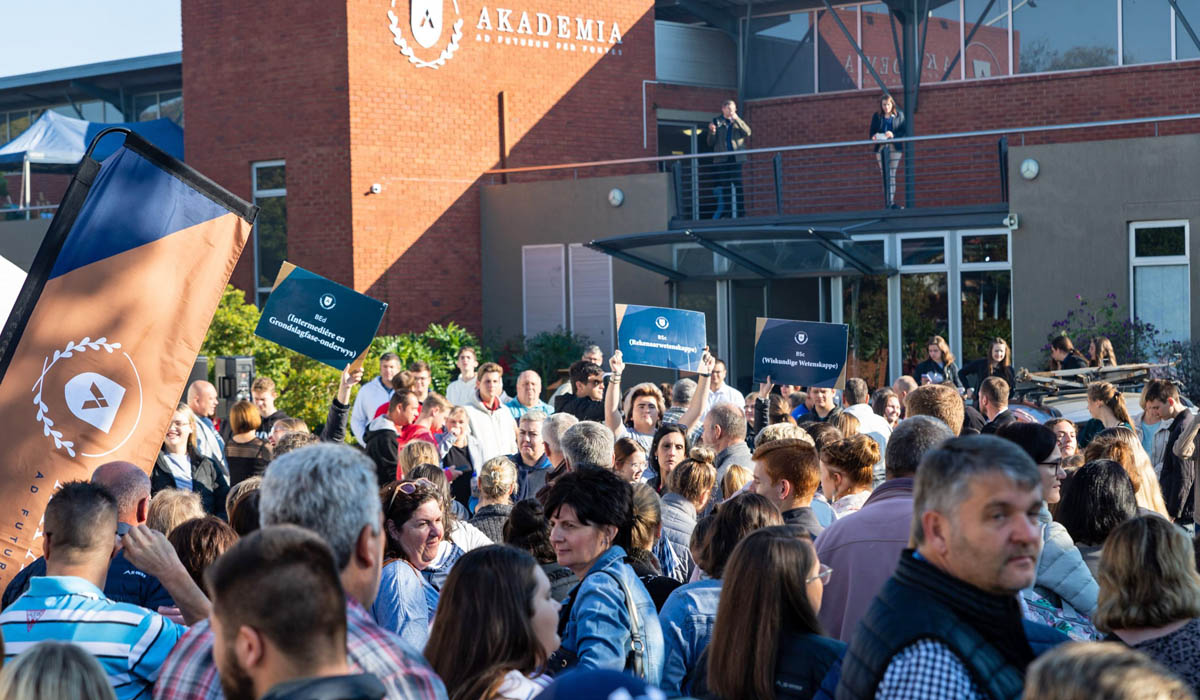
Now, fifty years since Afrikaans was at the centre of those protests, Prof Jansen’s article for News24 has started another dialogue which probes the controversial matter of Afrikaans-only private universities – such as the rapidly growing Akademia in Pretoria – in a democratic South Africa.
Since its publication, it has got tongues wagging on the ether, with pundits coming out in defence of or in opprobrium against these monolingual enclaves. Seeing the massive interest, this writer tried to read it, but it was locked behind a paywall, with just its provocative title — ‘A degree in isolation: Afrikaans-exclusive education endangers us all’ — dangling above the boxes with padlock signs, inviting you to subscribe.
One private Facebook message to Prof Jansen himself, and I had the original in my email. Given the passions it had stirred up on social media, I was anticipating an incendiary piece that might be weaponised against Afrikaans and Afrikaner culture. Instead, I found a well-balanced, essentially sensible critique of the limitations of insulated institutions which create bubbles that ultimately impede the ability of its very students to function optimally in settings beyond the laager.
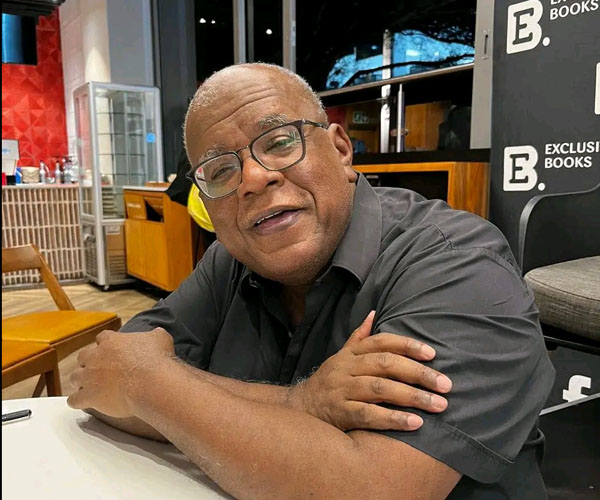
Prof Jonathan Jansen, currently Distinguished Professor of Education at Stellenbosch University. Image: Facebook.
Professor of Jansen starts out by recognising that the Constitution protects the rights of all academic institutions – including Afrikaans-exclusive ones – to operate freely, but is also quick to point out that we must ‘think very carefully what these Afrikaans institutions represent outside of the public model of higher education’.
Despite the desegregation of academic institutions, de facto racism still persists in most former white universities, Jansen notes, posing a challenge to meaningful integration. ‘The uncomfortable truth is that there are still white South Africans who have not made their peace with the fact that their children have to live and learn alongside Black people. True, many if not most white parents and their children have made their peace with desegregation on public universities campuses even if they remain awkward with the dynamics of integration.’
The third-year undergraduate class in education policy which he teaches at Stellenbosch University is ‘one of the most integrated classes you will find’, and Jansen intently seeks to teach them ‘how to be in a changing country so that they can access the best education in the subject together with intercultural competences that would make them brilliant teachers anywhere from Upington and Dubai to Swakopmund and the boroughs of London.’
His problem with monocultural institutions is the following: ‘An exclusive Afrikaans university denies you those broader educational experiences because it is not simply the language into which you are inducted — you are also inducted into an ideological narrowness where your own culture, education and belief systems are reinforced rather than challenged.’
He continues: ‘Afrikaans language and cultural communities still mean racial and ethnic enclaves separated from a broader, more inclusive South Africa. They do not even try to hide their intentions. Most of the students and lecturers around you are white and Afrikaans-speaking.
‘You are there because your parents want behoudendheid (conservation), not disruption with Afrikaans culture and education from primary school to high school to church to community and now university. You are locked into this peculiar form of Afrikaner whiteness and, as a consequence, thoroughly unprepared for a world that requires a different kind of preparation for education and work.’
Jansen’s gripe is not with Afrikaans itself. He agonises over the economic implications of white Afrikaans students fleeing from integrated universities or the country. But he worries equally about the resistance to full racial and cultural cohesion in our institution of higher learning.
‘What I am concerned with here is the deleterious effects on young people who are placed in Afrikaans universities where their reading lists will be proscribed, their perspectives on the social world will be narrow, and their preparation for work at home or abroad will be compromised. Their social and educational foundations offer a commitment to sameness that the past guaranteed, the present denies, and the future will frown upon.’
Those students in his aforementioned class, however, ‘are experiencing the value of living and learning together without the loss of culture or identity; rather, they acquire a broader South/African identity with which they can navigate the world around them. They can speak in Afrikaans when they ask questions in my classes and many just submitted a major project in Afrikaans. There are no limitations on language usage …’
Needless to say, there were those who hastily took to putting a red pen through Jansen’s piece, often justifying the insistence on the preservation of Afrikaner culture with the failings of the current government. Equally surprising was that this writer got wind of the piece from two Facebook ‘friends,’ a journalist and an academic – both Afrikaans – who saw eye to eye with the professor.
Meanwhile, a different issue or perspective has begun to brew in my mind. If these exclusively Afrikaans universities are undesirable in a global or even intercultural setting, what does one make of the virtually black-only (not by law) schools across the country’s townships? This is certainly unexplored territory, so perhaps we should go in there in part 2.
Featured image: A scene at Akademia, a private Afrikaans-language university in Pretoria. Image: Akademia website.