
By Riaan de Villiers
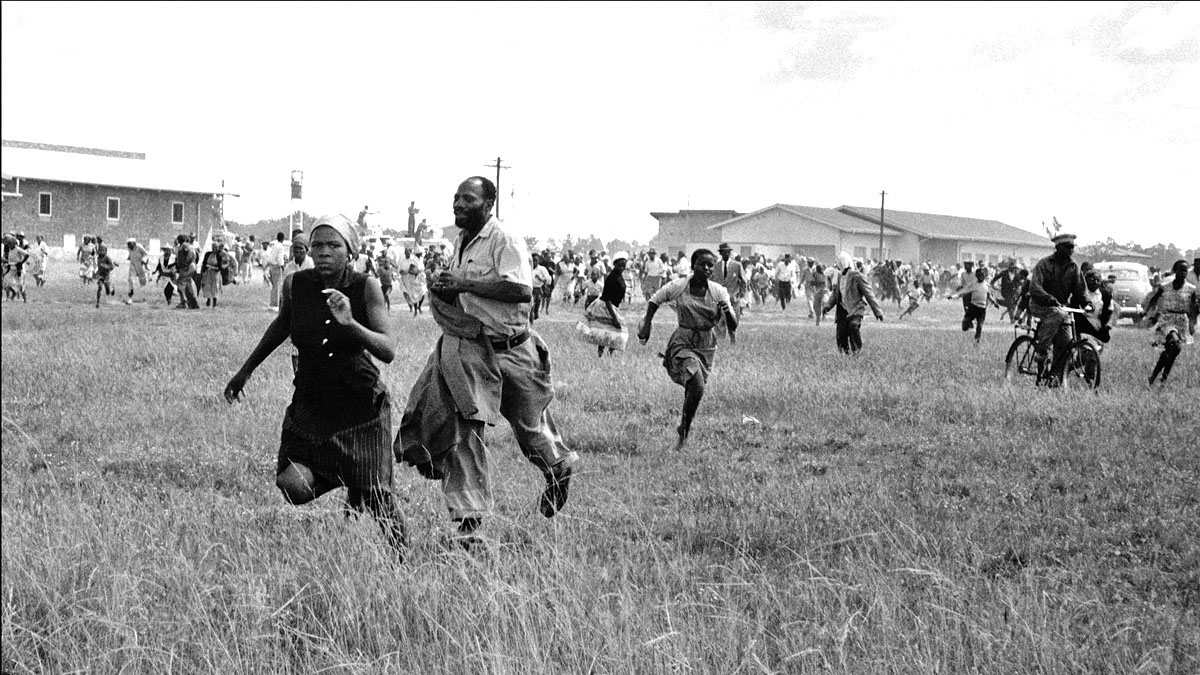
The renowned photojournalist Ian Berry – the only person who managed to photograph the Sharpeville massacre on 21 May 1960 — has died in England, aged 92. At that time, Berry was working for Drum Magazine, owned by Jim Bailey.
Born in Lancashire in1934, Berry came to South Africa in pursuit of a photographic career, and was eventually employed by Drum Magazine.
On the day of the shooting, he and an assistant editor, Humphrey Tyler, were sent to Sharpeville to cover a rumoured protest against the pass laws.
Protesters gathered around the Sharpeville police station. Police eventually opened fire on the crowd, killing at least 69 people, and wounding 289 others, including 29 children. Many of those killed or injured were shot from behind as they tried to flee.
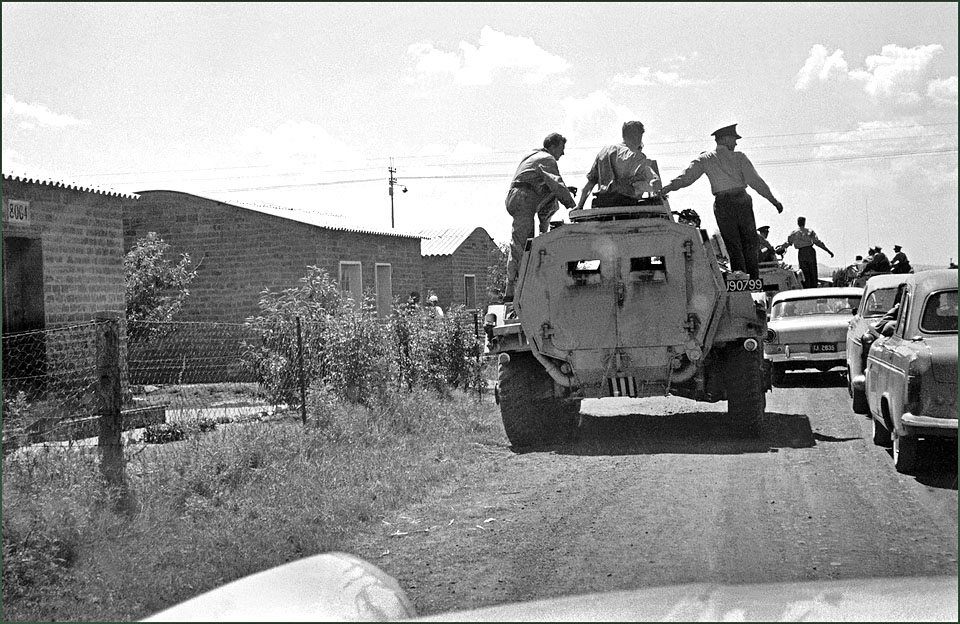
Police mounted on Saracen armoured vehicles enter Sharpeville township in the Vaal Triangle, Monday 21 May 1960. Image: Ian Berry.
Earlier, the police told journalists to leave or be arrested, but Berry managed to stay. He said later the scene was peaceful and he was about to leave when the shooting started. At first, he thought the police were either shooting blanks, or shooting over people’s heads to disperse them.
‘It was only when a woman who was standing next to me fell on the ground that I realised they were actually shooting bullets.’ He dropped to the ground and started to photograph the running crowd – including a young boy holding up his jacket to shield himself from the bullets.
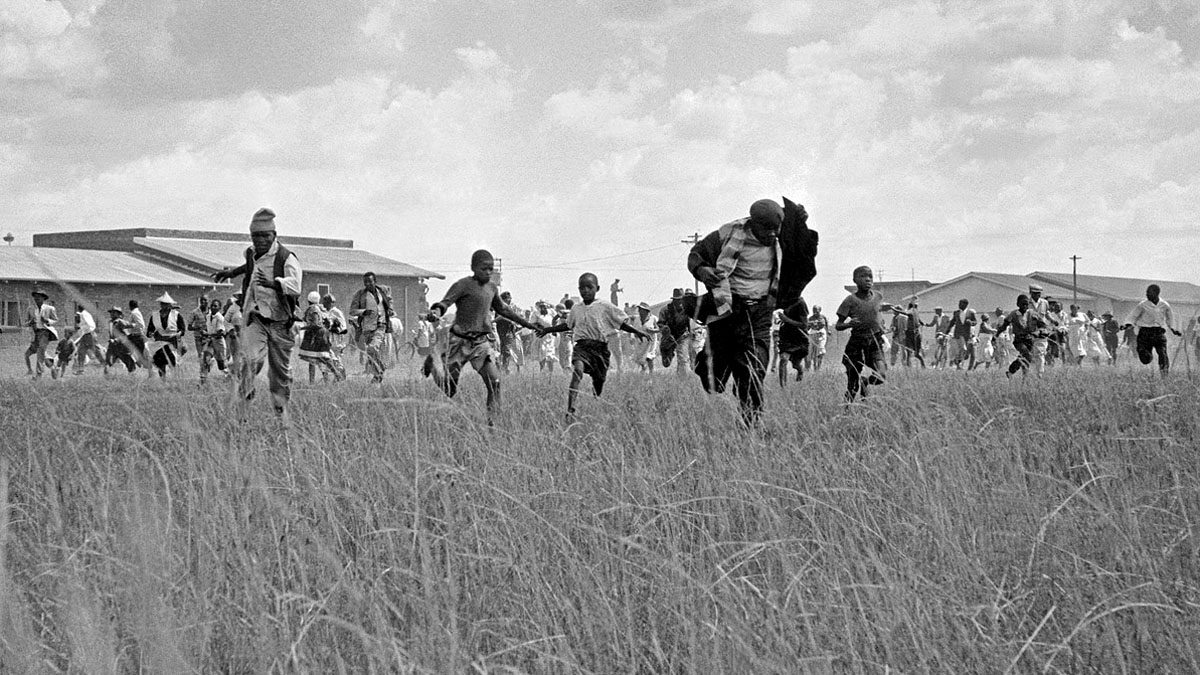
A young boy tries to shield himself against the bullets by pulling his jacket over his head. Police with firearms are visible in the distance. Image: Ian Berry.
At one point, the shooting stopped, but then started up again – it later became clear that, at that point, the police had reloaded their rifles. When it finally stopped, he ran back to the car and drove off.
Bailey refused to publish the photographs as he feared the magazine would be closed down, Instead, they were sent to an agency in London and published in the international press, including LIFE and Paris Match.
Berry was the only white civilian who had witnessed the shooting. When some of the protesters were charged with ‘affray’ — he was called to testify, and his photographs were also submitted as evidence that the police had misrepresented the shooting. As a result, the protesters were acquitted.
Two years later, Berry joined the renowned photo agency Magnum Photos in Paris, and in 1964 he began working for Observer Magazine. Over the next decade, he documented social and political conflict and upheaval in China, the Republic of Congo, Czechoslovakia, Ethiopia, Israel, Ireland, Vietnam, and the former Soviet Union. Among others, he was the only photographer who documented the Soviet invasion of Czechoslovakia in 1968, aimed at crushing the Prague Spring.
He continued to visit and photograph South Africa, and was banned at some point from entering the country — a ruling that was only overturned when Nelson Mandela came to power. In later years, he also shot major photo essays in various world regions unrelated to conflict.
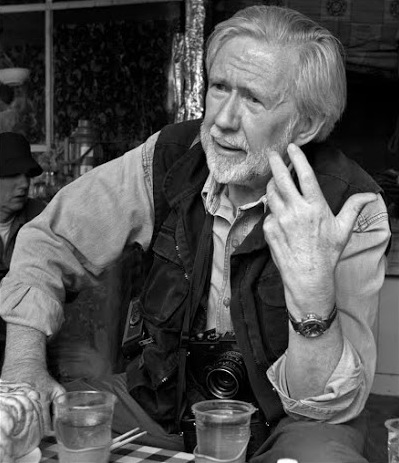
A recent photograph of Ian Berry. Image: Wikipedia.
In a statement, Magnum co-presidents Newsha Tavakolian, Gregory Halpern and Lorenzo Meloni have said: ‘Ian was part of Magnum for more than six decades, and his work showed the power and responsibility of photography. He documented difficult political events, but never lost sight of the people living through them. His photographs mattered because he stayed close to people, and did not look away.’
Referring to his Sharpeville images, Amateur Photographer has stated that Berry was one of few photographers whose images had changed the course of history.
Sources: Magnum Photos, Remembering Ian Berry; On this day in history; the Sharpeville massacre.
Thank you – it is so important that we remeber our history, and pass it on!
btw I am changing m y email from penny.brown@mweb.co.za to
brown.penny50@gmail.co.za
Berry made a great contribution to Drum magazine and the world of photojournalism.
A hero from a time of tragedy in South Africa
Capturing and exposing to the world , powerful images that have made history for future generations.
Thanks for your comments. In retrospect, Sharpeville was one of two irrevocable watersheds or tipping points in recent SA history — the second being the Soweto uprising … this is still not fully understood, even today …