
By Riaan de Villiers
On 19 April, in the course of his visit to Angola, Pope Leo XIV visited a small white church in the town of Muxima on the banks of the Kwanza River. The full significance of this visit is not generally known, and has not been spelled out in the promotional material issued by the Vatican about the Pope’s tour to Africa.
This gap has been filled by a report on the National Catholic Reporter, an independent website featuring alternative news about Catholicism. Written by Gerald Imray of Associated Press, the report reveals that the Church of Our Lady of Muxima was built by Portuguese colonisers at the end of the 16th century as part of a fortress complex, and became a hub in the slave trade. As such, ‘It remains a reminder of the inextricable link … between Catholicism and the exploitation of the African continent’.
At this point, enslaved Africans were baptised by Portuguese priests before being forced to walk the last 145 kilometre to Luanda to be put on ships to the Americas. According to Imray, the Portuguese colonisers were ‘emboldened by 15th-century directives from the Vatican that authorised them to enslave non-Christians’.
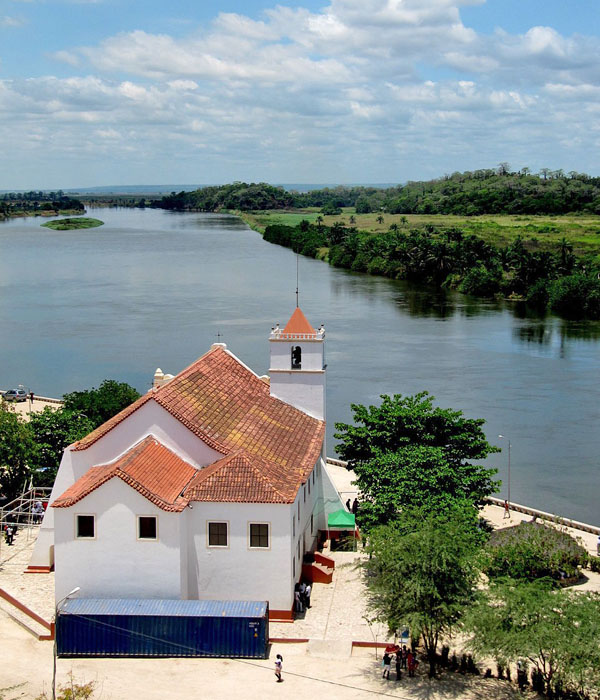
The Church of Our Lady of Muxima on the Nwanza River. (Vatican News on Instagram)
The report reminds readers of a historic reality that many people today don’t know about, or don’t want to know, namely that more than five million slaves were shipped across the Atlantic from Angola — more than those shipped from any other African country, and nearly half of the African total of 12.5 million. Yet, despite this, nearly 40 percent of Angolans are still Catholic.
To what extent could the Pope’s visit help to reconcile this historical paradox? Imray quotes Fr. Celestino Epalanga, a priest with the Catholic bishops’ conference of Angola, as saying: ‘For me, the pope going there to pray the Rosary … will give that place a new significance. We have to give it a new sense — to make this place sacred instead of being a place of evil.’
Imray concludes: ‘Both Epalanga and Fr. Stan Chu Ilo [a Nigerian priest and professor at DePaul University in Chicago] recognise colonialism’s impact, but say it is important for Leo to invigorate the Catholic Church in Angola — originally introduced by colonial oppressors — to be an agent for good confronting modern-day problems’.
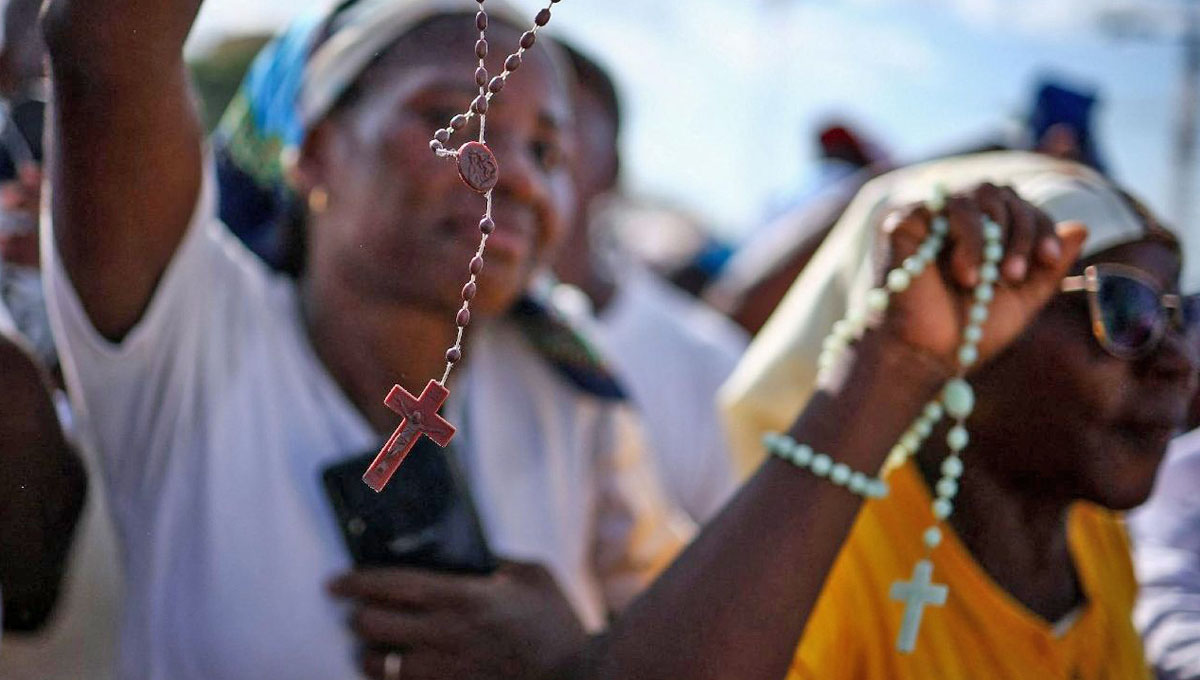
FEATURED IMAGE: Worshippers hold rosaries ahead of the rosary prayer led by Pope Leo XIV at the ‘Mama Muxima’ Shrine, Muxima, Angola, 19 April 2026. (Vatican News on Instagram)