
By Riaan de Villiers
On 26 June, four days before the anti-immigrant deadline, the prominent politician and business leader Mcebisi Jonas commented on the rising anti-foreigner sentiment and its underlying causes in terms that have attracted widespread attention in South Africa and elsewhere.
Speaking at the funeral of a Zimbabwean-born activist and public servant, Thokozani Damasane, he said the ‘crisis’ in South Africa was not caused by the presence of foreign nationals but by poor governance, amounting to ‘state failure’, and would persist after the foreigners had gone.
Supporters of the anti-migrant movement were being misled by politicians whose only purpose was to be elected and re-elected. Instead of maintaining an ‘ethno-nationalist’ orientation, he urged South Africans to return to a ‘national consciousness’ of solidarity with Africa.
A veteran political activist, Eastern Cape politician, and a former deputy minister of finance, Jonas is the non-executive chairman of the multinational MTN Group, which currently operates in 19 African countries.
His comments have been published in South Africa as well as elsewhere in Africa, including Nigeria. An edited version follows.
//////////////////////////////
People [foreign nationals] are being told to go home. What was home to Damasane? I understand, and Damasane understood, that home is where humanity is. It is about the good of humanity, and striving for the good of humanity.
The tribe is a product of colonial power. It is particularly dominant in areas conquered by the English, because they used the principle of indirect rule. They divided people by psychologically enhancing the notion that one was different from the other. That’s how the notion of tribe was born. And tribalism is the cover for ethnicity.
So tribe is the greatest enemy of Africanism and pan-Africanism. As long as the tribe and ethno-nationalism survives, it will be the cause of South Africans’ greatest suffering.
In the streets, it’s no longer about whether you are from South Africa or not from South Africa. It’s about the tribe, it’s about who you are, you are not like us, you are different, and therefore we have to persecute you.
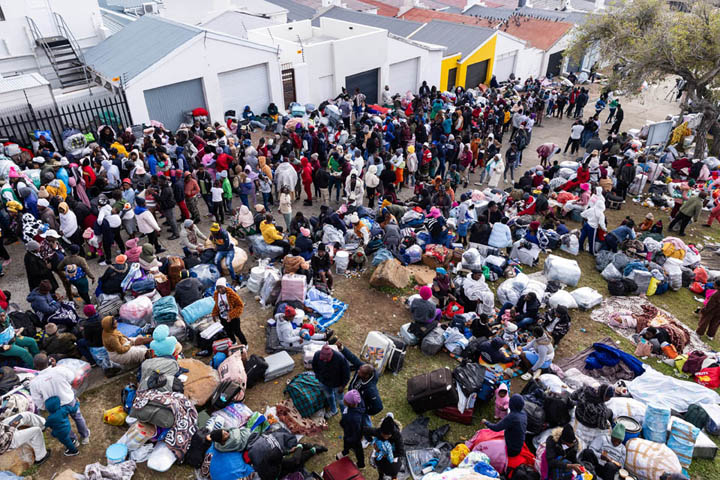
People gathered outside the Zimbabwean Consulate in Cape Town, waiting to be repatriated.
Some spent several nights in the cold and rain. GroundUp / Ashraf Hendricks
////////////////////
Something fundamental has been lost in our country. Something fundamental has been lost in our nation.
When I look at South Africa, I think about the national debt, the level of oppression and inequality, the level of exclusion of our people, the level of corruption, the betrayal of the dream of liberation.
That’s the crisis we have. Foreigners can leave tomorrow – inequality will still be with us. Foreigners will leave tomorrow – unemployment will still be with us. Foreigners will leave tomorrow – our police will remain corrupt. Foreigners will leave tomorrow – our politicians will still be concerned with one thing: being elected and re-elected.
The problem is more deep-seated, namely the failure of the state. The state doesn’t manage immigration. It doesn’t manage our borders. It doesn’t manage law enforcement. It doesn’t manage education. So what are you expecting?
When people feel the brunt of these problems, they become vulnerable to politicians whose sole purpose is to be elected and re-elected. Some of them have no credibility whatsoever. But they lead marches and tell our people that actually the problem is not us – it is foreigners.
We cannot judge people by their origins. We cannot determine the legal status of people by their origins.
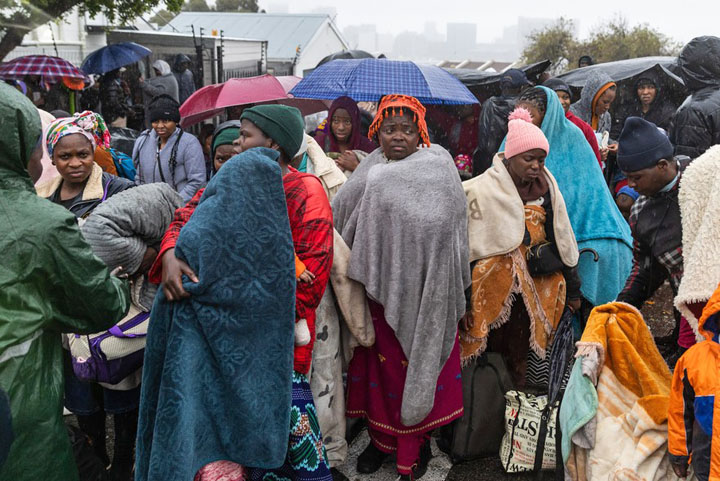
Zimbabwean women and children outside the Zimbabwean Consulate in Cape Town, Saturday 28 June 2026. After spending the night in the rain, they were relocated to an official repatriation site on Sunday morning. GroundUp / Ashraf Hendricks
////////////////////
If there is one thing we should do, for ourselves and for the rest of the country, we should take our country back to a national consciousness that South Africa is nothing without Africa, and Africa is nothing without South Africa. To tell our people that we are a nation embedded in Africa, and that our growth and economic fortunes are intertwined with the growth of africa.
We are educated enough, as South Africans, But psychologically, we are still enslaved … to still maintain this notion of tribe … Liberation movements still sustain this notion of tribes – I’m Zulu, I’m Xhosa – and we sustain this as if it is real. It’s just in our heads. We’re creating it because it makes us feel big. Instead, identity politics and ethno-nationalism should be banished in our country.
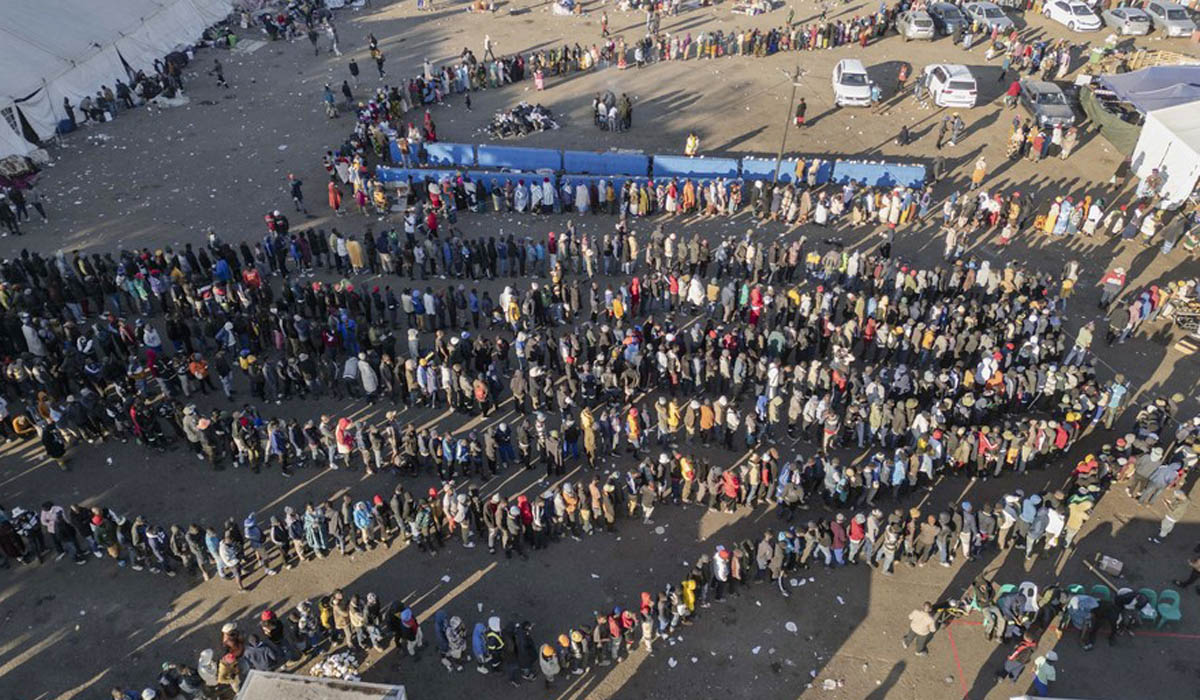
FEATURED IMAGE: Malawians queue in Durban to be processed and repatriated, 28 June 2026. Since then, the repatriation site has been moved to Musina. GroundUp / Ihsaan Haffajee.