
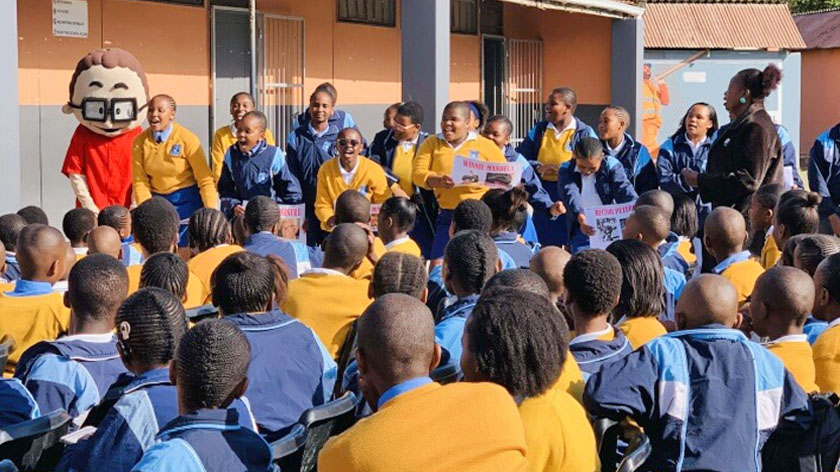
By Phakamisa Mayaba
Three years ago, 81 per cent of Grade 4 learners in South Africa could not read for meaning. This week, the Nal’ibali Trust won the prestigious Library of Congress International Literacy Award, taking home a cool cash prize of $50 000.
For more than a decade, this NGO has been in the forefront of initiatives aimed at cultivating not only a culture of reading among young people, but also emphasising the importance of mother tongue education and literature. Its net is cast wide, and it manages programmes around reading for pleasure, prioritising stories from marginalised languages, platforming upcoming writers, and an array of other areas not least of which is to employ scores of ‘reading ambassadors’ across the country.
This prestigious award has not only granted recognition to the organisation’s role in the fight against the alarming literacy statistics, but also highlighted the outstanding role of NGOs in our national quest to become a better society.
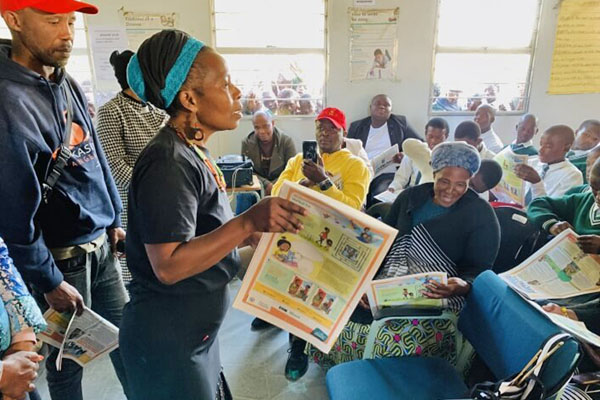
On many fronts, NGOs have been a thorn in the flesh of government, whipping it into acting in the best interests of the marginalised and voiceless when it would otherwise be dragging its feet. Although the government is often quick to take credit for positive initiatives, its hand has often been forced by the tireless work of NGOs — marches, pickets, risky work at the grass roots, and costly court actions – that has often forced the government’s hand. The case studies are overwhelming.
This includes the shameful period of former president Thabo Mbeki’s AIDS denialism, when some of the most educated members of his Cabinet were advocating ‘beetroot’ and ‘garlic’ as the snake oil for treating a detectable virus, and spurning Western medication – a dark period which, according to some analysts, cost the lives of many thousands of South Africans, most of them poor and marginalised.
The ruling ANC stood obstinately by Mbeki. Back then, speaking out against the Essex graduate was not advisable, especially when you were a non-profit organisation dependent on donor handouts. (At the same time, there is evidence that conflicted health care officials did what they could to salvage the situation behind the scenes.)
It was in this tense and dark time that the Treatment Action Campaign (TAC) began to stage its renowned public protest and advocacy campaign, using every possible means to challenge and confront political leaders.
By the time Mbeki’s successor, Jacob Zuma, rose to power, what better way was there for him to quickly gain favour with the masses than to acquiesce to the voice of activism that had been loudest all those years? In 2009 he launched the free, scaled-up rollout of antiretroviral treatment (the largest in the world), and became a hero overnight.
Earlier this year, the Foundation for Alcohol-Related Research (on whom this publication has previously reported) sadly closed its doors. In the early 2000s, a previous district manager in the Northern Cape Department of Health, Mariette Eckhard, had become increasingly ‘concerned about the high level of spontaneous abortions, still births, neonatal deaths, low birth weights and poor health of newborn babies in De Aar.
A few enquiries eventually led her to FARR founder Prof Denis Viljoen, and they soon began their ground-breaking research and advocacy.
FARR’s research in the Western and Northern Cape revealed figures that left both academics and government in disbelief – essentially, that these two provinces exhibited the highest incidence of Fetal Alcohol Spectrum Disorder (FASD) anywhere in the world. Of course, South Africa had been living with this situation for many years – prior to FARR’s work, it had simply not been acknowledged.
Dismayingly, despite their phenomenal contribution, nobody stepped up to assist when it started becoming clear that FARR’s funds were running out, and they still had a major role to play in addressing this complex, pernicious and long-term condition.
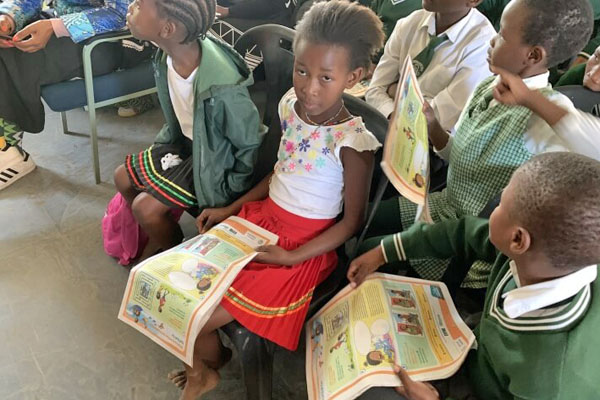
In 2014, five-year-old Michael Komape drowned in a pit latrine at a school in Limpopo. The legal advocacy group Section27 helped his family to sue the state, ensuring not only that they won damages, but also compelling the Department of Basic Education to come up with a plan for eliminating pit latrines at all schools throughout the country. From education to environmental matters, Section27 have been involved in some of the country’s most high-profile cases.
A decade ago, being a sex worker meant constant run-ins with law enforcement, and spending nights in holding cells. Today, the lines are blurred. Although sex work remains criminalised, consistent activism by the Sex Workers Education and Advocacy Taskforce (SWEAT) has led to a legal review, and the ANC proposing that sex work be decriminalised at its 2017 Elective Conference.
This has resulted in police in many parts of the country simply turning a blind eye to sex work, and the emergence of health facilities specifically tailored to the needs of sex workers.
So, in many areas where governance has failed, NGOs – or civil society – have been the saving grace. There are many other examples of major social problems that would would not have been addressed or resolved without their efforts.
From high-profile examples streamed on national television down to the women who run soup kitchens in their neighbourhoods, NGOs provide a lifeline for those roughing it on the margins. They are saving the rhino, feeding the poor, and bringing dignity to women who barely ten years ago were subjected to the worst kind of treatment on our inner-city streets.
From Gift of the Givers to Sisonke Gender Justice, these are often the first and only people who show up in neglected communities, eager to bring relief or just to say a prayer.
Featured image: A Nal’ibali reading-for-enjoyment session in progress at a rural primary school. All images drawn from the Nalibali website.