
With an eye on widespread community teamworks, and conscious of some smart lessons from the Kiwi rugby football warrior Ma’a Nonu last week, Maeder Osler explores further models of digital communications doing the rounds from this waenhuis werfgebou.
This is the opening item in a series, a spin pass meant to help kick off Rugby’s Greatest Rivalry, the fabled tour of South Africa by an All Black team which is currently under way.
Here you are cordially invited — from Springbok precious metal all greens and golds to Kiwi indigenous feathers and All Black silver ferns – to the likes of Toverviews where one can share hearing more of the shades of echoing landscape winds and whistles, which I imagine one can listen to from nearby distant local contests to current and cosmopolitan competition on global veldts. Read more at your risk and peril …
So what’s the Haka? Good old google defines this as a ‘traditional ceremonial dance of the Māori people of New Zealand. It combines loud chanting, forceful foot stamping, body slapping, and fierce facial expressions—like bulging eyes and sticking out the tongue. It is used to show strength, unity, and pride.’ The All Blacks perform a Haka before international matches to honour their heritage and challenge their opponents.’ For ‘challenge’, rather read ‘intimidate …’
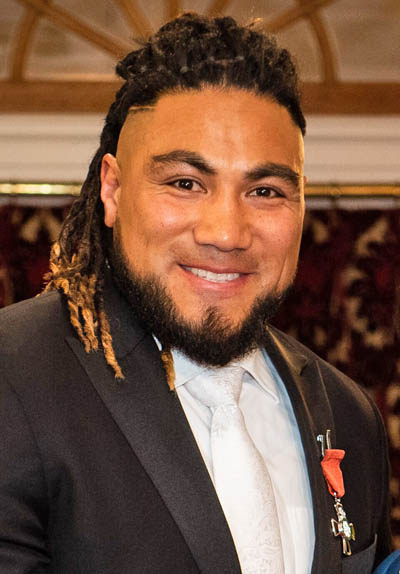
The renowned former All Black centre Ma’a Nonu, now 44, who has joined the Sharks in Durban in a largely advisory role. Last week, he made the local and even international news by performing a solitary Haka in response to the All Blacks’ customary team version before their encounter with the Sharks. He said later he had done this as a ‘mark of respect’ to his former team. For more on this, read the BBC report Nonu, 44, performs solo haka in response to All Blacks.
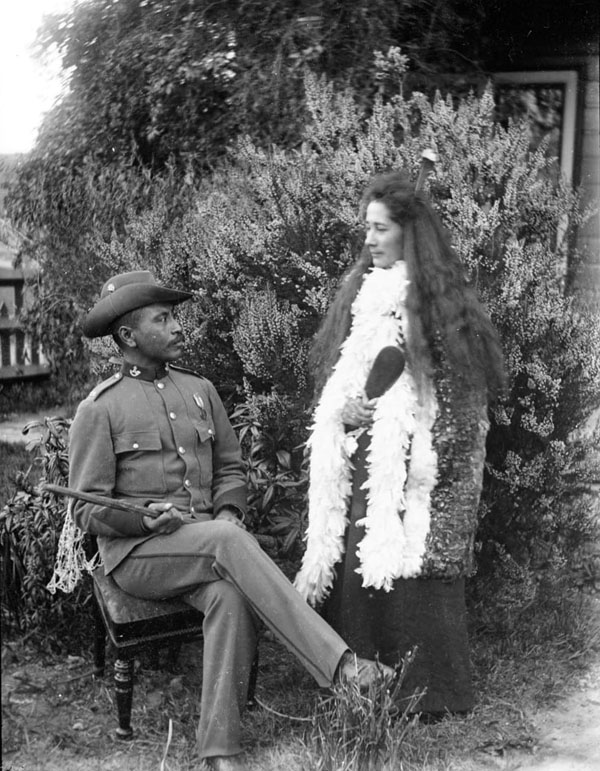
Walter Callaway, a Maori soldier who formed part of the Kiwi contingent in the Anglo-Boer War. According to Mike Dwight, author of ‘Walter Callaway: A Maori Warrior of the Boer War’, he composed and taught the Kiwi troops a Haka which they performed throughout the war. Despite official disapproval, more than 50 Maori soldiers fought with the 6,500 Kiwis during the South African War. Three – and possibly five — were in the 1st NZ Contingent (214 volunteers), who were baseđ in Colesberg. This picture of Callaway was taken in New Zealand.
A model for all seasons?
From a WhatsApp group named NZ Karoo Connection, Maeder Osler selects for this newsletter his (edited) message to an enterprising ex-Saffer living in New Zealand, Mike Dwight; and for the interest of the score of mainly local Colesberg mobile phone readers, illustrators, writers, and community helpers.
‘One Kiwi yesterday (the day of the Sharks’ franchise vs the touring Silver Ferns rugby contest at Kings Park, Durban) not only returned the Haka challenge through a daunting hair display, but also for a final few magic moments got the Sharks to eventually pass like the New Zealanders, against overwhelming odds (the score was then the final tally 0 Sharks 54 New Zealand). All of this while the exhibition (being compiled by Mike Dwight and others for inter alia the Colesberg Kemper Museum) is on the way …’
Such are the instant wonders of digital comms that, within hours, Mike responded:
‘Interesting, Walter Callaway (a New Zealander Maori soldier) composed and taught the Kiwi troops a Haka which was adopted and performed by New Zealanders throughout the SA War (Anglo-Boer War). It aroused great interest on arrival in Cape Town in 1899 and most likely was performed in Colesberg too. Don’t think they had such dashing hairstyles as was seen in Durban … [the last a reference to Nonu’s abundant dreadlocks, adorned with colourful beads]
Different levels for different fellas?
With the help of your own lived experiences, locations and times, and contexts, the community teamworks can be revealed, by the same exploration method this model offers, and /or by simply substituting your own model method – and hopefully sending us your copy in the interests at least of having a rugby football?
Community teamworks around the Greatest Rivalry Tour
What is remarkable about the wars and contest is that they are widely shared. There is a sort of intriguing corporate memory? That aside, the earliest known links Colesberg has with the Kiwis is around the times of the Boer War, within close site of this very waenhuis itself. While you are preparing generally to ask Google for that immense amount of information, it has earlier this year, from at least March 2026, struck a scrum of Colesbergers that surely here is a connection of value.
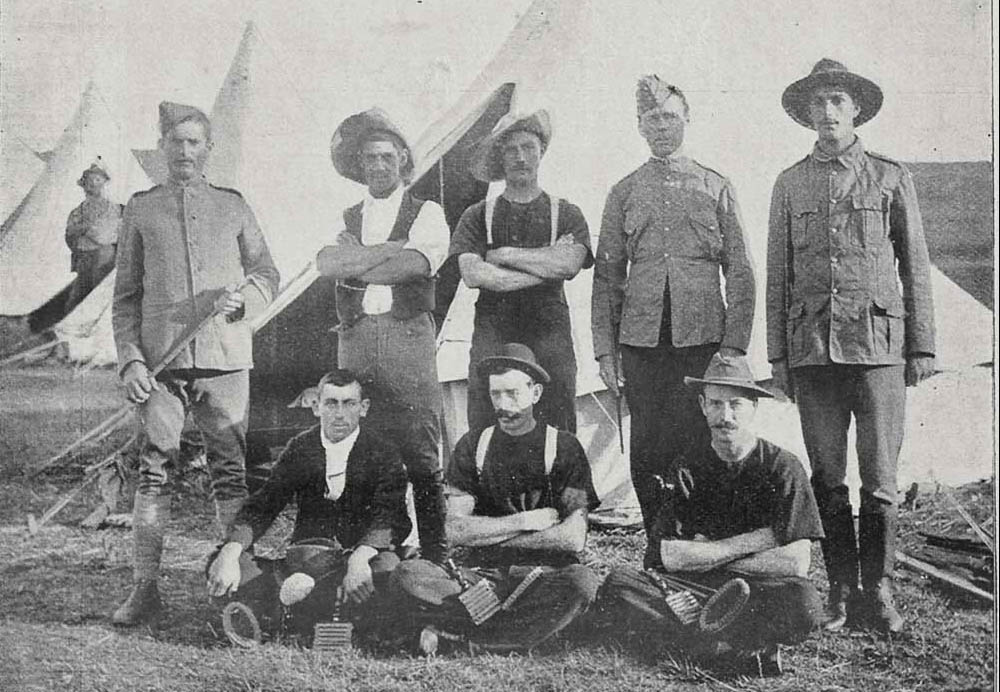
FEATURED IMAGE: Kiwi troops near Colesberg, 1899. Image: supplied by Mike Dwight.
Well done Maeder what a fabulous article. The photos speak to the story and the writing has really sparked my interest for more . Greatly look forward to the next installment .
Profound Maeder. You seems to be a big rugby enthusiast, All Black supporter maybe. Surely you were not born yet 😂. So some Maori descendant might have heard about Colesberg. Interesting.
I was astounded to hear that over 6000 Kiwi troops fought in SA.
Amazing. I have been to the gravesites of Aussies in your area (as you well know) but never considered the Kiwis.
Great article Maeder
Well done Maeder on the outstanding piece of lost history. It was really so interesting to read about those exploits which could have been lost with time. It is comforting to know/realise that this interesting has been brought to light.