
Since President Cyril Ramaphosa’s announcement that he would revive his previous plans to take the adverse 2022 report on the Phala Phala farm scandal at the centre of possible parliamentary impeachment proceedings on legal review, processes that are usually quite glacial have started to move a lot faster.
This has come after a sensational Constitutional Court ruling that the parliamentary vote (essentially by an ANC majority) to set the report aside — thereby effectively blocking the impeachment process — was ‘unconstitutional and invalid’, and that the impeachment process should be reactivated.
This blindside moved Ramaphosa to address a matter that had previously had been a no-go zone at pressers. In marked contrast with his usually cheerful demeanor, his TV ‘address to the nation’ on Monday night took on a morbid tone. The last time he seemed in such low spirits was during the Covid epidemic, when the country’s supply of respirators was running low, and the bodies were piling high.
Not even Washington’s hostility towards South Africa could stop Ramaphosa from pulling off a resounding speech at the Global Progressive Mobilisation in Spain earlier this year. Even in front of the Farlam Commission into the Marikana massacre, he was in his element, occasionally taking the gloves off as he squared up with the likes of Advocate Dali Mpofu. But not even the strongly worded address this Monday could conceal that there was something deflated, maybe wounded, about the head of state.
Essentially, he said he would revive a previous decision to take the independent panel’s report on judicial review – which was no longer necessary when parliament rejected the report four years ago — and also announced that, in the national interest, he would not resign. (For the full text of his address – which is worth reading, both for his views and reasoning as well its useful summary of the ins and outs of the Phala Phala impeachment saga – click here.)
‘Opportunistic elements,’ to use ANC secretary-general Fikile Mbalula’s term, immediately smelled blood. On Wednesday, the ANC held a special NEC meeting to discuss the latest developments around Phala Phala. At a media briefing following the meeting, Mbalula declared that the president’s decision not to resign and to take the panel report on review enjoyed the full support of the party. Rather ironically, he went on to say:
‘What we will not do as the ANC is to be oblivious … like it happened in the past to the law itself and be corrected by the courts. You will remember … with the judgment on Nkandla, it was very clear what the Public Protector was saying we must do. We had options before us, and instead we invented our own rules, and we were punished by the Constitutional Court. We have learnt from experience about that so we can’t be delinquents when it comes to the law and the Constitution of the country …’
But the drawing of the laager around Ramaphosa immediately raises questions about ethics and a party that clearly hasn’t quite learnt its lesson. Whatever happened to the New Dawn rule that anyone with a cloud of wrongdoing hovering above them should be asked to ‘step aside’?
The ANC has repeatedly (even routinely) placed party interests ahead of those of the country, and Ramaphosa himself has been a willing participant. About four years ago, a leaked audio clip surfaced of the president allegedly telling the NEC that he would sooner ‘fall on the sword’ than to reveal the names of ANC cadres who had used state money and resources to bankroll various election campaigns around the time of the CR17 bid.
Reportedly, he said: ‘One of the officials said soon they will be revealing about how money was used for some campaigns, and I said I would rather they say, you got money from this business for CR than for the public to finally hear that their public money was used to advance certain campaigns.’ In any other democracy, this would have triggered a first-class political crisis. In the ANC, however, it was business as usual.
One high-profile ANC cadre who has undergone an unexpected change of heart is former Parliamentary Speaker Nosiviwe Mapisa-Nqakula, now facing serious charges of graft. During an appearance on the Thabo Mbeki Foundation’s African Renaissance Podcast, hosted by the former EFF thinker Dr Mbuyiseni Ndlozi, she pontificated about how ‘we need to think beyond the party line,’ a sentiment supposedly inspired by the devastating Concourt judgment.
She did not hesitate to throw Mbalula under the bus, fingering him as the person who strong-armed the ANC caucus into rejecting the independent panel report in 2022, and who (according to her) gave her colleagues the impression that she harboured a personal grudge against Ramaphosa over her removal from the cabinet.
She did, however, express concern about the fact that the panel report would return to a parliament in which the ANC no longer enjoyed a majority, and was generally panic-stricken. Her comments echoed those of Baleka Mbete, another former Speaker in the National Assembly, during a recent SABC interview.
The deputy minister of water and sanitation, David Mahlobo, has cheerfully supported the president, as has the ANC Youth League. The one organisation that has not bought into the cheerleading has been the South Africa Communist Party. Its general secretary, Solly Mapaila, has been raining fire and brimstone, calling for Ramaphosa’s immediate impeachment.
Meanwhile, Mbalula could have gotten away with painting a picture of a united party front, were it not for some suspicious chinks — notably that the NEC meeting had reportedly been snubbed by Nkosazana Dlamini-Zuma, the current Speaker, Thoko Didiza, and Thabo Mbeki. Nonetheless, Mbalula and company are still sitting pretty, given that impeachment remains highly unlikely as it would require a hefty two-thirds majority vote. In the interim, Didiza has outlined the process of putting together a 31-member impeachment committee by 22 May.
Much of the discussion has been about how parties in the GNU, notably the DA and UDM – which had previously bore down hard on Ramaphosa over Phala Phala – would cast their votes. Also, given alleged threats of dismissal if ANC members failed to follow the party line, would a secret ballot not be in the interest of justice? And why has Ramaphosa – who helped to draft our constitution, and says he remains committed to it — repeatedly failed to take the nation into his confidence from the get-go?
In the court of public opinion, his own version of a ‘Stalingrad defence’ has created the impression of a person desperate to douse the fires and cling to power. This doesn’t inspire confidence. Instead, it seems as if he is using the loopholes and graces of the nation’s supreme law to avoid having to honour one of its basic tenets, namely to account to the very people whom this founding document is meant to serve.
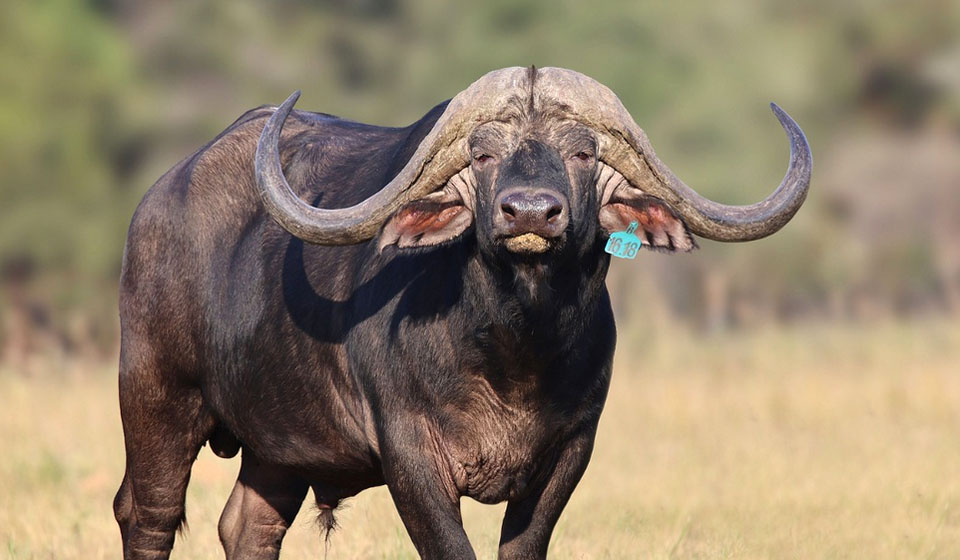
FEATURED IMAGE: A Buffalo bull, one of a number of rare game auctioned at President Ramaphosa’s Limpopo game farm, Phala Phala Wildlife, in September 2023. This image appears on the Phala Phala Widlife Facebook page. Since then, no auctions have been posted.
A very well written piece by Phakamisa Mabaya. If only more people and a lot more of the usual ANC voters, could see, read and understand what has actually occurred.
Nice article. I think Ramaphosa’s removal would be bad for South Africa but his continuing presidency under the cloud of Phala Phala would be worse. The ANC needs to be clear about the removal of anyone from public office who faces serious charges. Anyone. How will Ramaphosa deal with this issue when he is, himself, under reasonable suspicion of corruption. If he has a case in answer to the charges, he has not made it.
Sticking my neck out, as a fan of Cyril Ramaphosa ,from his day one in political life, viewed as both an insider and then an outsider, his leadership as negotiator and facilitator, has proved of much worth in the RSA, and elsewhere. It intrigues me that one can occasionally get a glimpse of the same genetic material as his spectacularly horned Ankora cattle, in the small equally genetically valuable local private herd alongside the N1 near eastern fuel filling stations alongside Colesberg; even though the cattle may seem to be rather modest of body. Likewise – perhaps also by compensation in direct mature food value – it is interesting to the range of local wares of buffalo products promoted entrepreneurially in the same area, including from the western filing station sides of the N1 and N9. Such interconnections; like inequalities, continue to astound: as integral to our challenges. If CR proves his innocence, my hopes would be for a much wider more confident ‘broad church’ drive from him, and his less paranoid supporters from the spread ranges of political parties in the country. That, probably is a much better chance of leaving the archaic idealogues and opportunists in the dust. That would be a dream worth cultivating. But is he really does prove to be guilty, no horns and no body weights and spices are likely to be of much use? What we need are more, not less, broad churches, thinks I.